
Buying a washer and dryer is one of those home decisions where a few inches can make a surprising difference. A machine may look compact in a showroom but feel much larger when you try to fit it through a doorway, into a laundry closet, or beside a kitchen cabinet.
The tricky part is that washers and dryers come in several styles. A standard side-by-side pair takes up considerable floor space, while stacking the machines saves width but adds height. Compact models are smaller, and the measurements listed by manufacturers may not include the extra room needed for hoses, vents, doors, and installation.
For planning purposes, many full-size front-load washers and dryers are approximately 27 inches wide each, with depths commonly around 30–34 inches. A side-by-side pair therefore needs roughly 54 inches of appliance width before allowing for gaps and surrounding space.
In everyday units, a typical 27-inch-wide machine measures 2 feet 3 inches wide, 68.58 centimeters, 685.8 millimeters, and 0.6858 meters. In this guide, you’ll learn how washer and dryer dimensions work, how to convert them, and how to picture their size using familiar household objects.
Every Washer and Dryer Measurement Converted
There isn’t one measurement that describes an entire washer or dryer. Width, depth, and height all matter, and each can vary by model. The table below uses a common 27-inch appliance width as a practical reference.
| Unit | Width of a 27-Inch Appliance |
|---|---|
| Inches | 27 in |
| Feet and inches | 2 ft 3 in |
| Decimal feet | 2.25 ft |
| Centimeters | 68.58 cm |
| Millimeters | 685.8 mm |
| Meters | 0.6858 m |
| Yards | 0.75 yd |
For a more complete picture, these are typical planning ranges for full-size laundry appliances. Always confirm the exact specifications for the model you’re considering.
| Dimension | Common Approximate Range |
|---|---|
| Width of one machine | 27 in |
| Height of one front-load machine | 38–40 in |
| Depth of one machine | 30–34 in |
| Width of two machines side by side | 54 in before gaps |
| Height of a stacked pair | Roughly 76–80 in, depending on models and stacking kit |
These are general examples, not universal standards. Top-load washers, compact laundry units, ventless dryers, and machines with larger drums may have different dimensions.
How to Convert Washer and Dryer Dimensions
The basic conversion formulas are straightforward:
- Inches to feet: Divide inches by 12. For example, 27 ÷ 12 = 2.25 feet.
- Inches to centimeters: Multiply by 2.54. For example, 27 × 2.54 = 68.58 cm.
- Inches to millimeters: Multiply by 25.4. For example, 27 × 25.4 = 685.8 mm.
- Inches to meters: Multiply by 0.0254. For example, 27 × 0.0254 = 0.6858 m.
If you’re comparing washer and dryer dimensions in feet or centimeters, remember to convert width, depth, and height separately. A machine that’s 27 inches wide is not necessarily 27 inches deep or tall.
Where Washer and Dryer Dimensions Fit on a Size Chart
The easiest way to understand laundry appliance size is to separate the machines by installation style. Two appliances with similar widths can require very different spaces depending on whether they sit next to each other, stack vertically, or fit into a compact laundry closet.
Side-by-Side Washers and Dryers
A common full-size setup uses two machines that are each about 27 inches wide. Placed next to each other, their combined appliance width is approximately 54 inches, or 4 feet 6 inches, before you allow space between the machines or along the sides.
Their depth matters just as much. A machine measuring 32 inches deep may project beyond nearby cabinets, especially once hoses, a vent connection, or the rear clearance are considered.
Stacked Washer and Dryer Dimensions
Stacking two compatible machines changes the layout rather than eliminating the appliances’ total volume. A stacked unit may be around 27 inches wide and approximately 76–80 inches tall, although the final height depends on the washer, dryer, and approved stacking kit.
This arrangement is useful in narrow laundry rooms, apartments, and closets where floor width is limited. Check the combined height against ceiling clearance, shelving, and any cabinet doors above the machines.
Compact Washer and Dryer Dimensions
Compact machines are often around 24 inches wide, although their height and depth vary. They can work well in small homes or designated laundry cabinets, but capacity is usually lower than that of many full-size models.
A compact pair side by side may need approximately 48 inches of appliance width before gaps and clearances. Don’t assume every compact dryer can be stacked with every compact washer; compatibility depends on the specific models and stacking hardware.

12 Things That Help You Visualize Washer and Dryer Dimensions
The numbers make more sense when you compare laundry appliances with things already found in a home. These examples focus on width, depth, and height, since each measurement affects where a machine can fit.
1. A 27-Inch-Wide Kitchen Cabinet
A washer or dryer that’s 27 inches wide is close to the width of a narrow kitchen cabinet. Many kitchen cabinets come in different widths, so a 27-inch cabinet is a useful comparison rather than a universal standard.
Imagine standing in front of the cabinet and then looking at the washer beside it. Their front-facing widths may look similar, but the appliance is often deeper and taller than the cabinet itself.
This comparison is useful when planning a laundry area next to kitchen cabinetry. However, cabinet width alone doesn’t tell you whether the appliance will fit beneath a counter or between two fixed panels.

2. Two Machines Beside Each Other
Two machines that are each 27 inches wide create a combined appliance width of 54 inches, or 4 feet 6 inches. That’s the width of the machines themselves, not necessarily the full opening required for installation.
A side-by-side arrangement is common because both machines remain easy to reach without stacking. You can load the washer and transfer clothes directly into the dryer, provided their doors and controls are positioned conveniently.
Picture a horizontal space measuring four and a half feet across. You’ll still need to account for any gap between the machines, side clearance, and the space needed to open the doors.

3. A Standard Interior Door
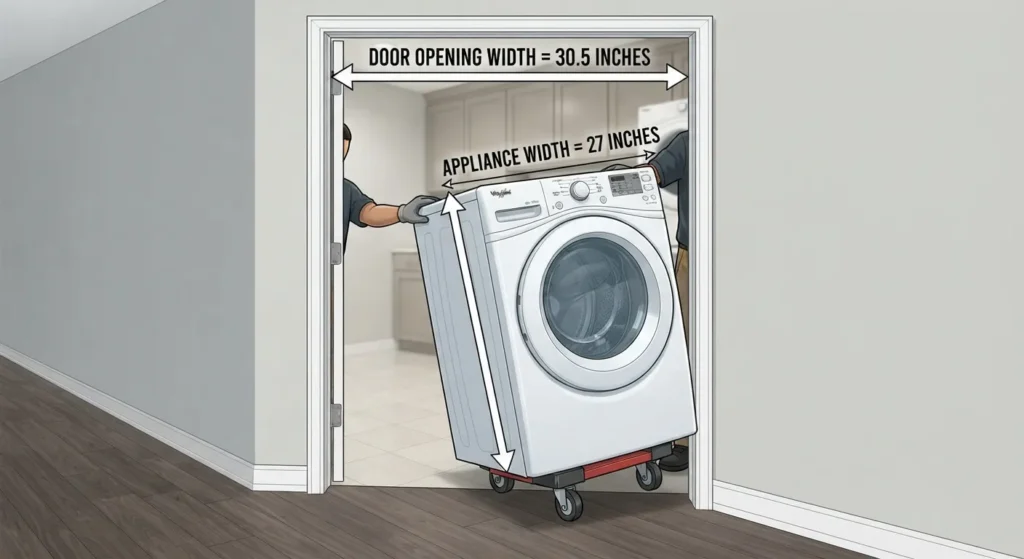
Many interior doors are around 30–32 inches wide, although sizes vary. A 27-inch-wide washer may look narrow enough to pass through one, but the machine’s depth, packaging, handles, and the actual clear opening can complicate the move.
The door’s nominal size is not always the same as the usable opening. Hinges, the door stop, and the angle at which the appliance is carried can reduce the available space.
Before delivery, measure the narrowest point along the route, including hallways and turns. A machine that fits the laundry space may still struggle to reach it.
4. A Kitchen Countertop
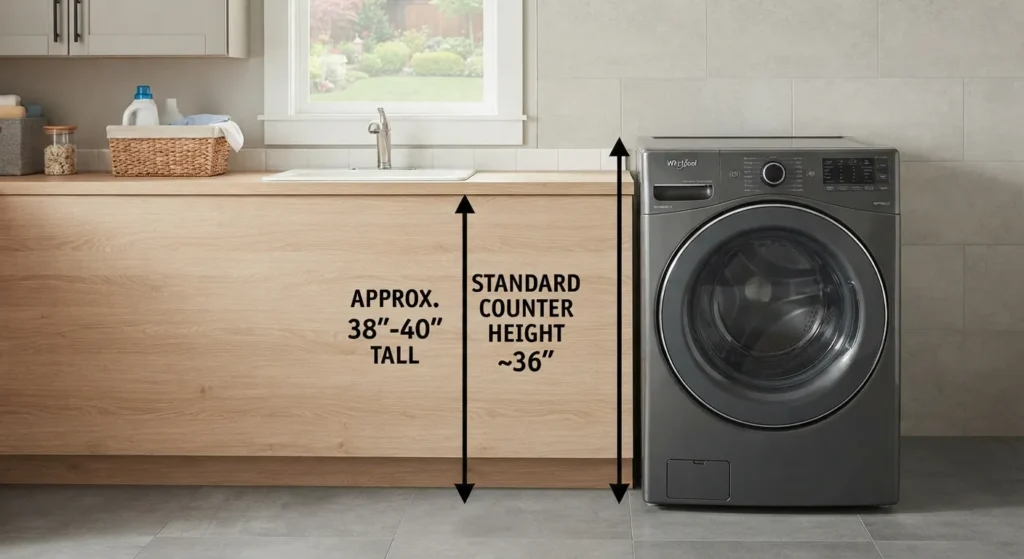
A typical kitchen countertop is about 36 inches above the floor. Many front-load laundry machines are around 38–40 inches tall, so the top of the machine may sit a little higher than the counter.
That difference matters when placing a washer beside a counter or beneath a shelf. A few inches can affect whether the surface lines up neatly or whether overhead storage becomes awkward.
Visualize the counter as a reference line across the room. A taller appliance may extend above it, while some compact or specialty models have different heights.
5. A Twin Mattress
A typical US twin mattress is about 38 inches wide. Two 27-inch appliances side by side take up around 54 inches, so the pair is substantially wider than the mattress.
The mattress provides a familiar reference because most people can picture its width on a bedroom floor. It also makes the difference between one machine and a two-machine setup easy to understand.
Imagine placing a twin mattress across the floor and then marking out another 16 inches of width. That extra space brings you close to the combined width of the two appliances, before installation gaps.

6. A Small Desk
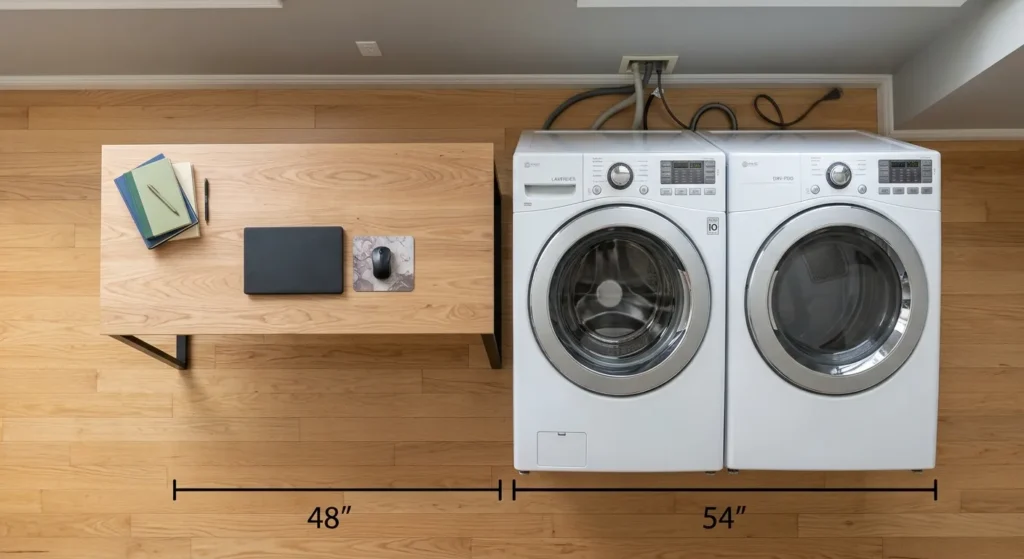
A small desk measuring 48 inches wide is about four feet across. A pair of 27-inch laundry appliances would extend approximately six inches beyond that width in total.
Desks are helpful visual references because they have a clear rectangular footprint. You can compare the appliance pair with a desk against a wall to get a feel for the horizontal space needed.
The comparison is only about width: desks usually have a different depth and height from laundry machines. Don’t use the desk’s footprint as a substitute for the appliance specifications.
7. A Standard Bathtub
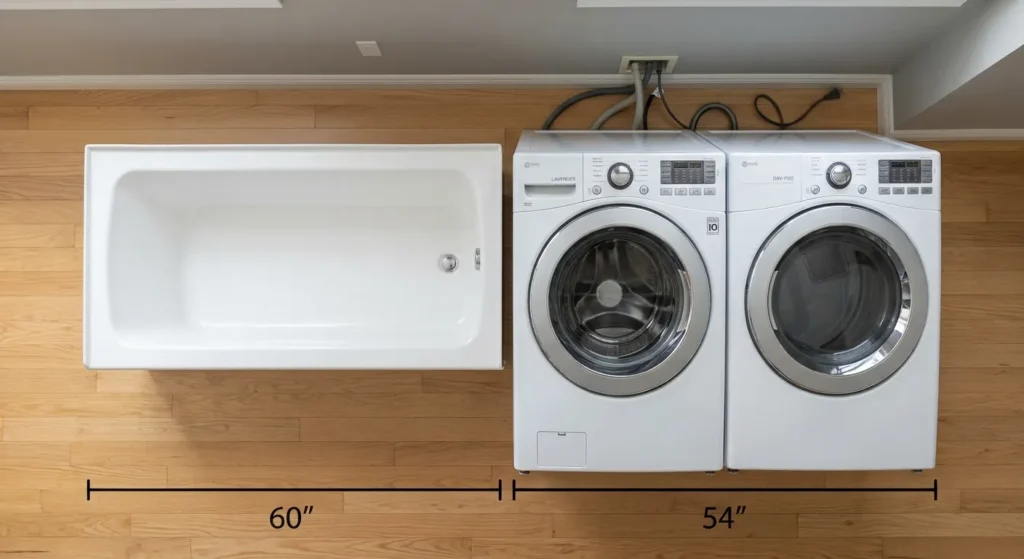
A common alcove bathtub is about 60 inches long. Two 27-inch-wide laundry machines together measure approximately 54 inches, making the pair slightly narrower than the bathtub is long.
This comparison helps you picture the overall width of a side-by-side setup. Both measurements are close enough to compare mentally, even though one describes a bathtub’s length and the other describes the appliances’ combined width.
Bathtub sizes vary, and the surrounding enclosure adds space of its own. Treat the comparison as a visual guide, not a recommendation for placing laundry appliances in a bathroom.
8. A Full-Size Refrigerator
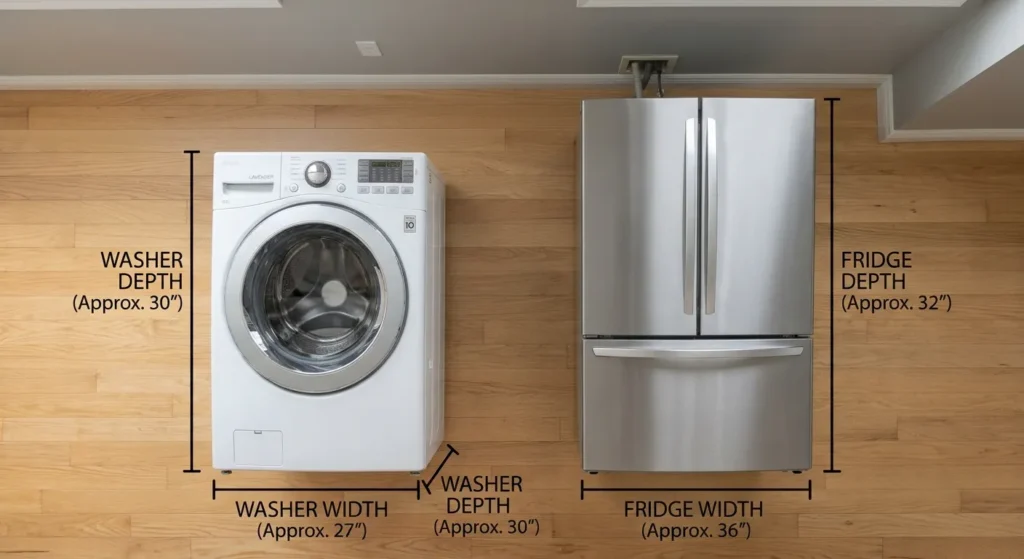
Many full-size refrigerators are around 30–36 inches wide, although narrower and wider models are common. A 27-inch washer is often a little narrower than a refrigerator in this range.
The comparison also highlights depth. Both refrigerators and laundry machines can project noticeably from a wall, and connections or door movement may require additional clearance.
If your laundry area already contains a refrigerator or tall cabinet, compare the manufacturer’s width, depth, and height rather than judging from the front alone. Two appliances that look similar in width may need different amounts of usable space.
9. A Dining Table
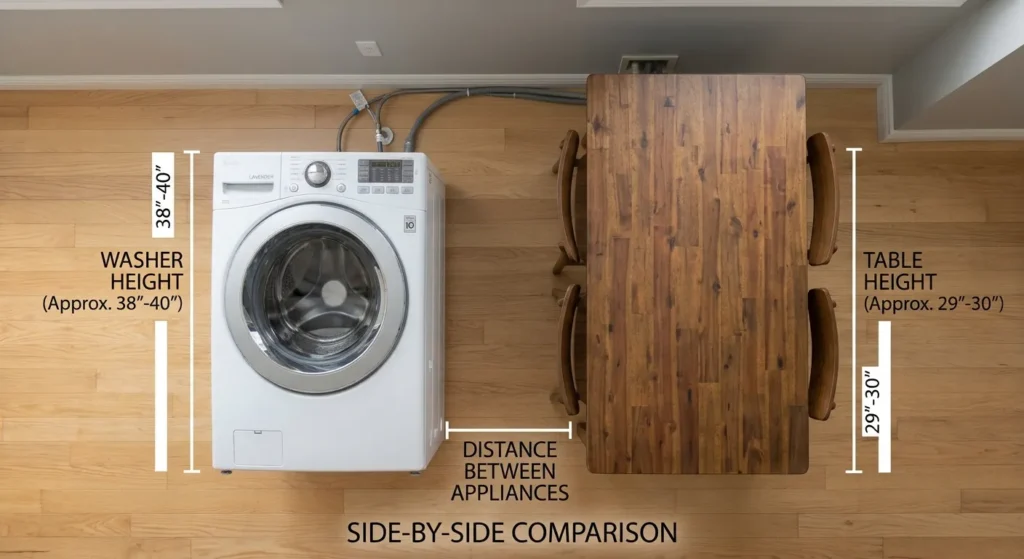
A typical dining table is roughly 29–30 inches high. Many front-load washers and dryers are around 38–40 inches tall, so the appliance can be about 8–11 inches taller than the tabletop.
This is a useful way to imagine appliance height without picturing a measuring scale. If you can picture reaching across a dining table, imagine the machine rising noticeably above that level.
The exact difference depends on the table and the laundry model. This comparison is particularly helpful when planning a shelf or counter above the machines.
10. A Tall Suitcase
A large checked suitcase may stand around 28–30 inches tall, depending on its design. A typical full-size laundry machine is usually taller, often reaching approximately 38–40 inches.
Suitcases are familiar objects that make height easier to estimate. Imagine the suitcase standing on the floor and then picture the washer rising another several inches above its top.
This is an approximate comparison because luggage dimensions differ by brand and may include wheels and handles. It’s useful for visualization, but it won’t tell you whether a machine clears a shelf.

11. A Compact Laundry Machine
Many compact washers and dryers are around 24 inches wide, compared with approximately 27 inches for many full-size models. That three-inch difference may sound small, but it can matter in a narrow laundry closet.
Compact appliances are designed for smaller homes, apartments, and spaces where a full-size machine would be difficult to accommodate. Their drum capacities and overall dimensions depend on the model.
Picture three inches as the width of a small handspan. That is the approximate difference between these example widths, although depth and height must also be checked.

12. A Laundry Basket
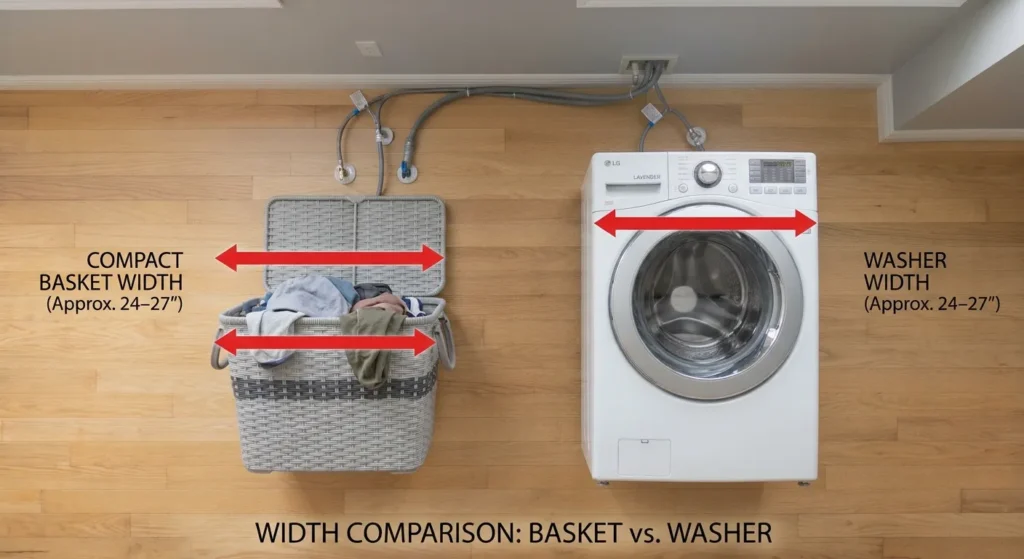
Some rectangular laundry baskets measure around 24–27 inches across, which puts them in the same general width range as a compact or full-size laundry machine. Basket dimensions vary considerably, so check one you already own if you want a closer comparison.
A laundry basket is particularly relevant because it is often used immediately beside the washer or dryer. Even if the machine fits, there needs to be enough room to set the basket down and move comfortably.
Imagine the basket sitting in front of the appliance. The machine’s width may be manageable, but the combined space needed for the basket, an open door, and a person standing nearby can be much greater.
The Space-Planning Question People Actually Mean
When people search for washer and dryer dimensions, they’re often trying to answer a more practical question: How much room do I need to install the machines?
The answer depends on whether the machines sit side by side, stack vertically, or fit into a closet. Start by measuring the available width, depth, and height, then compare those figures with the manufacturer’s exact specifications.
How Much Space Do Side-by-Side Machines Need?
Two machines that are each 27 inches wide occupy 54 inches of combined width. The opening may need to be wider to provide installation clearance and allow for uneven walls or gaps between the appliances.
Depth deserves equal attention. A washer or dryer with a listed depth of 32 inches may need more room once hoses, a vent connection, or other rear fittings are included. Front clearance is also important for opening doors and loading laundry.
How Much Room Does a Stacked Washer and Dryer Need?
Stacked laundry machines save floor width, but they need considerably more vertical space. A stacked pair may reach roughly 76–80 inches tall, depending on the two machines and the approved stacking kit.
Measure from the finished floor to the lowest obstruction above the unit. Include ceiling slopes, shelves, cabinets, and any space needed to install or service the equipment.
What Clearances Should You Allow?
There is no single clearance figure that applies to every washer and dryer. Manufacturer instructions specify the required side, rear, and top clearances, as well as ventilation and connection requirements for the particular model.
Before buying, check these details:
- Width: Measure the narrowest part of the installation opening.
- Depth: Include hoses, venting, and rear connections as specified by the manufacturer.
- Height: Account for stacked equipment, shelves, cabinets, and ceiling clearance.
- Door swing: Make sure doors can open fully and laundry can be removed comfortably.
- Delivery route: Check doorways, halls, corners, and stairs before scheduling delivery.

Getting to These Measurements Without a Tape Measure
You can estimate washer and dryer dimensions using familiar objects, but these methods are best for visualization. For purchasing or installation, use an actual measurement and the manufacturer’s requirements.
1. Use a Standard Sheet of Paper
US Letter paper is 8.5 × 11 inches. Placing several sheets edge to edge can help you estimate a short distance, but keep the edges aligned and remember that paper only gives an approximation.
For example, three 11-inch lengths make 33 inches, which is close to the depth of some full-size laundry machines. This is a rough estimate, not a replacement for measuring the space.
2. Compare the Space With a Doorway
A common interior door may be around 30–32 inches wide. If your machine is approximately 27 inches wide, the difference may appear small when you compare them visually.
Measure the clear opening, not just the door slab. Handles, hinges, door stops, packaging, and the angle of movement can affect whether the appliance will pass through.
3. Mark Out the Footprint on the Floor
Use removable painter’s tape to mark a rectangle matching the washer’s stated width and depth. For a machine measuring 27 × 32 inches, mark a footprint of 27 inches across and 32 inches from front to back.
Repeat for the dryer or mark the combined width of a side-by-side pair. This makes it easier to spot conflicts with cabinets, doors, walkways, or nearby appliances before delivery.
4. Use Your Own Laundry Basket
If you know your laundry basket’s width, place it in the proposed installation area as a visual reference. Some baskets are close to the width of a compact or full-size appliance, but designs vary.
A basket is also a useful way to check whether you’ll have space to carry clothes in and out. It does not replace the need to check appliance depth, height, and clearances.
5. Measure Height Against a Known Surface
A kitchen counter is commonly around 36 inches high, while many full-size front-load machines are roughly 38–40 inches tall. Comparing these heights can help you picture whether the appliance may sit above a counter line.
For a stacked setup, use a real tape measure or a measured vertical reference. A height close to 80 inches can leave limited space beneath low ceilings or overhead cabinets.
FAQs About Washer and Dryer Dimensions
What are standard washer and dryer dimensions?
Many full-size front-load washers and dryers are about 27 inches wide, 38–40 inches tall, and 30–34 inches deep. Actual dimensions vary by model and style, so check the manufacturer’s specifications before planning an installation.
How many feet wide is a 27-inch washer?
A 27-inch washer is 2.25 feet wide, which is also 2 feet 3 inches. This describes width only; its depth and height are separate measurements.
How many centimeters is 27 inches?
Twenty-seven inches equals 68.58 centimeters or 685.8 millimeters. This is a common reference width for many full-size laundry machines, not a guarantee for every model.
How much space do I need for a washer and dryer side by side?
Two machines that are each 27 inches wide have a combined width of 54 inches, or 4 feet 6 inches. You’ll generally need additional space for installation gaps and any clearances required by the manufacturer.
How tall is a stacked washer and dryer?
A stacked pair may be approximately 76–80 inches tall, but the exact height depends on the washer, dryer, and stacking kit. Measure the full assembly and compare it with the available ceiling height.
Are all washers and dryers 27 inches wide?
No. Many full-size models are around 27 inches wide, while compact units are often closer to 24 inches. Top-load machines and specialty models may have different dimensions.
How deep is a standard washer and dryer?
Many full-size models have a listed depth around 30–34 inches. Hoses, vents, and other connections can increase the total space needed, so check the installation guide rather than relying on the cabinet depth alone.
Can I install a washer and dryer in a closet?
Yes, provided the closet accommodates the appliances and meets the manufacturer’s clearance, ventilation, electrical, plumbing, and access requirements. Check door openings and the delivery route, too, before buying.
Where That Leaves You
A typical full-size washer or dryer is often about 27 inches wide, 38–40 inches tall, and 30–34 inches deep. Two 27-inch machines side by side take up approximately 54 inches of width, while stacking them saves floor space but increases the total height.
To visualize a 27-inch width, think of a narrow kitchen cabinet or a laundry basket of similar size. For a side-by-side pair, imagine a space 4 feet 6 inches across before adding installation gaps.
The most useful step is to mark the proposed footprint on your floor and compare it with the exact model measurements. A little planning now can prevent a frustrating delivery-day surprise later.

Jack Harrison is a passionate writer who creates informative, engaging and easy-to-understand content for online readers. He enjoys researching new topics and sharing practical insights that help readers discover useful ideas and information.