

A bed can look perfectly sized in a furniture showroom and feel much larger once you bring it into your bedroom. The reason is simple: a mattress may fit two people comfortably, but the bed frame, bedside tables, wardrobes, and walking space all compete for the same floor area.
Knowing standard bed dimensions makes planning easier. Whether you’re buying a twin bed for a child’s room, a queen for a guest bedroom, or a king for a spacious master bedroom, the width and length determine how much room you will have to sleep and move around.
In the United States, standard mattress sizes range from a compact twin at 38 × 75 inches to a king at 76 × 80 inches. That’s a difference of 38 inches in width between those two sizes, even though their lengths are relatively close.
Standard bed dimensions vary by size: a twin measures 38 × 75 inches (3 ft 2 in × 6 ft 3 in), a queen measures 60 × 80 inches (5 ft × 6 ft 8 in), and a king measures 76 × 80 inches (6 ft 4 in × 6 ft 8 in). These convert to centimeters, millimeters, and meters using the same simple formulas explained below. The measurements refer to the mattress, while the complete bed may occupy more space.
1. Every Standard Bed Size Converted to Different Units
There isn’t one measurement that describes every bed. A twin and a king have different widths, and some sizes also differ in length. The most useful starting point is to compare the standard U.S. mattress dimensions side by side.
Standard bed dimensions in inches, feet, cm, mm, and meters
| Mattress size | Inches (W × L) | Feet and inches (W × L) | Centimeters (W × L) | Millimeters (W × L) | Meters (W × L) |
|---|---|---|---|---|---|
| Twin | 38 × 75 in | 3 ft 2 in × 6 ft 3 in | 96.52 × 190.5 cm | 965.2 × 1,905 mm | 0.9652 × 1.905 m |
| Twin XL | 38 × 80 in | 3 ft 2 in × 6 ft 8 in | 96.52 × 203.2 cm | 965.2 × 2,032 mm | 0.9652 × 2.032 m |
| Full / Double | 54 × 75 in | 4 ft 6 in × 6 ft 3 in | 137.16 × 190.5 cm | 1,371.6 × 1,905 mm | 1.3716 × 1.905 m |
| Queen | 60 × 80 in | 5 ft × 6 ft 8 in | 152.4 × 203.2 cm | 1,524 × 2,032 mm | 1.524 × 2.032 m |
| King | 76 × 80 in | 6 ft 4 in × 6 ft 8 in | 193.04 × 203.2 cm | 1,930.4 × 2,032 mm | 1.9304 × 2.032 m |
| California king | 72 × 84 in | 6 ft × 7 ft | 182.88 × 213.36 cm | 1,828.8 × 2,133.6 mm | 1.8288 × 2.1336 m |
These are common U.S. mattress dimensions. Sizes and naming conventions can vary by country and manufacturer.
How to calculate bed measurements
If you’re working from a measurement in inches, the conversions are straightforward:
- Inches to feet: Divide by 12. A 60-inch queen mattress is 5 feet wide.
- Inches to centimeters: Multiply by 2.54. A 60-inch width equals 152.4 cm.
- Inches to millimeters: Multiply by 25.4. A 60-inch width equals 1,524 mm.
- Inches to meters: Multiply by 0.0254. An 80-inch mattress length equals 2.032 meters.
For example, a king mattress is 76 inches wide. Divide 76 by 12 and you get 6 feet with 4 inches remaining, so its width is 6 feet 4 inches.
These conversions are useful when comparing online furniture listings that use different units. If you are buying from an international retailer, check whether the listed dimensions refer to the mattress, bed frame, or entire assembled bed.
2. Where Bed Dimensions Fit on a Mattress Size Chart
The biggest difference between mattress sizes is often width. Twin beds are designed to save space, while queen and king beds provide a wider sleeping surface.
Here is how the common sizes compare by width, length, and approximate floor area.
| Mattress size | Width | Length | Approx. mattress area |
|---|---|---|---|
| Twin | 38 in | 75 in | 19.79 sq ft |
| Twin XL | 38 in | 80 in | 21.11 sq ft |
| Full | 54 in | 75 in | 28.13 sq ft |
| Queen | 60 in | 80 in | 33.33 sq ft |
| King | 76 in | 80 in | 42.22 sq ft |
| California king | 72 in | 84 in | 42 sq ft |
Area figures are approximate and represent the mattress surface, not the full bed frame.
A full mattress is 16 inches wider than a twin. A queen is 6 inches wider than a full, while a king adds another 16 inches over a queen but keeps the same standard 80-inch length.
The California king takes a different approach. It is 4 inches narrower than a standard king and 4 inches longer, which can be useful for taller sleepers who want extra length.
One important detail: mattress dimensions do not equal room dimensions. A frame may add several inches around the mattress, and you’ll also need space to walk, open drawers, and access closets. Always check the assembled bed’s external dimensions before making a purchase.
3. 12 Real-World Comparisons to Picture Bed Sizes
A conversion chart tells you the numbers, but familiar objects make them easier to imagine. These comparisons focus on mattress widths, lengths, and footprints you can picture in an ordinary room.
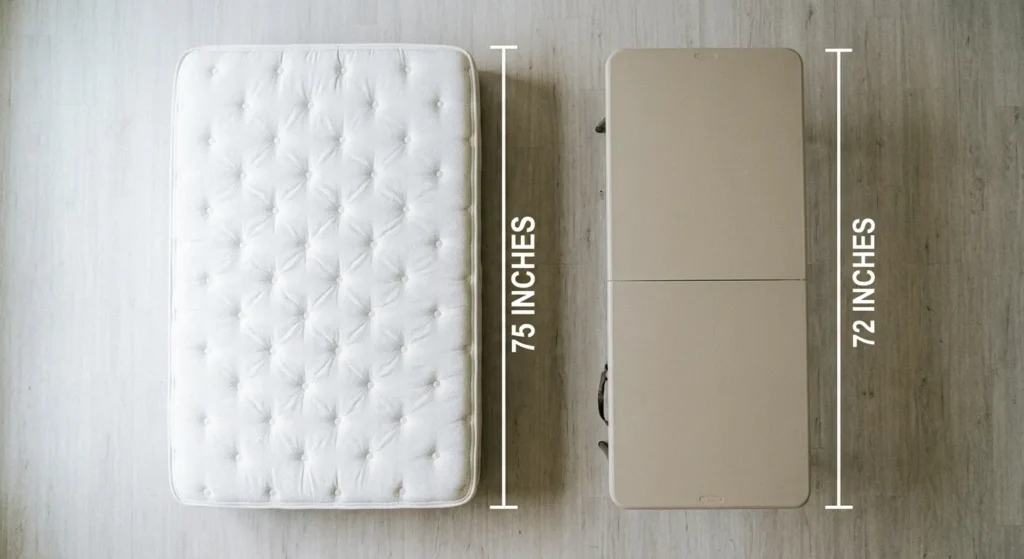
1. A Twin Mattress Compared With a 6-Foot Folding Table
A common folding table is 72 inches long, while a standard twin mattress is 75 inches long. The mattress is just 3 inches longer than the table.
That makes a 6-foot table a convenient reference when estimating a twin’s length. Picture the table from end to end, then add a small amount at one end.
The comparison is about length, not width. A folding table’s width depends on its design, so it shouldn’t be used to estimate a mattress’s 38-inch width unless you know the table’s measurements.
2. A Queen Mattress Compared With a 5-Foot Span
A queen mattress is 60 inches wide, exactly 5 feet. That is a useful measurement because many people can picture a five-foot span more easily than a number in inches.
Queen mattresses are popular because they provide more width than a full without taking up as much space as a king. The standard length is 80 inches, or 6 feet 8 inches.
If you imagine a 5-foot line across your floor and a 6-foot-8-inch line perpendicular to it, you’ve pictured the basic queen mattress footprint.

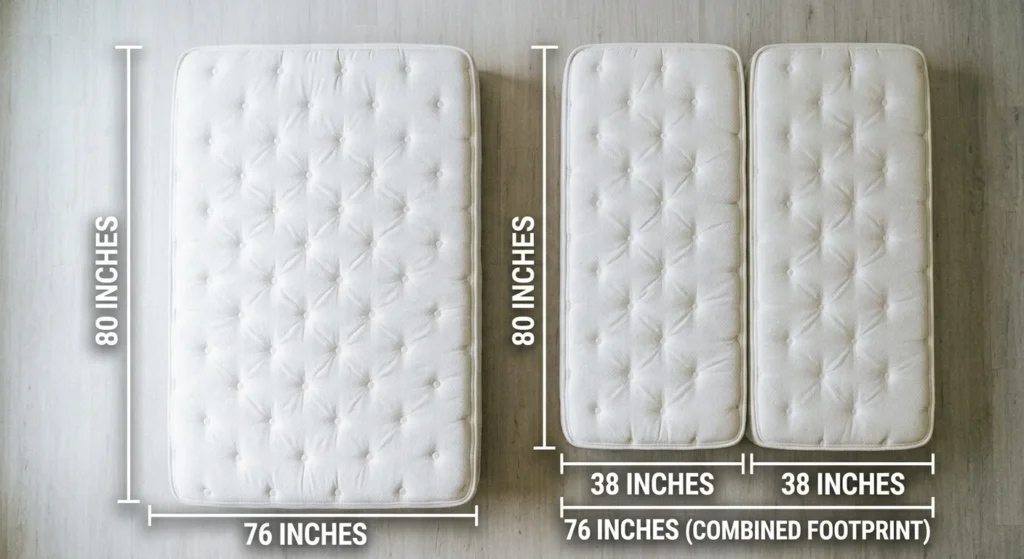
3. A King Mattress Compared With Two Twin XL Mattresses
A standard king mattress measures 76 × 80 inches. Two Twin XL mattresses, each 38 × 80 inches, can be placed side by side to create the same overall width and length.
This is why split-king setups are available for adjustable beds. Each person can have a separate mattress, and each side may be adjusted independently depending on the bed system.
The two-mattress arrangement has a center seam, unlike a single king mattress. Bedding and mattress protectors may also need to be selected specifically for a split-king setup.
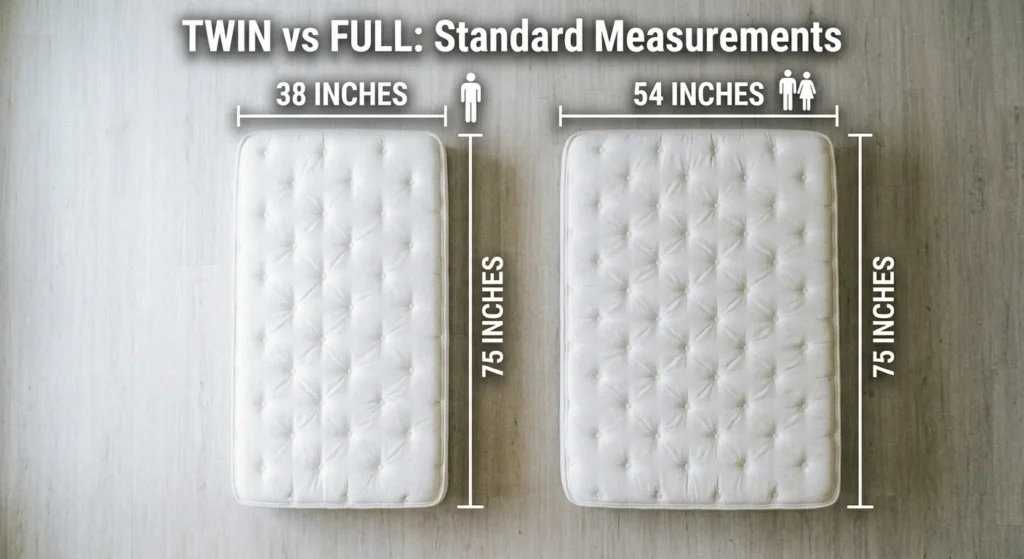
4. A Full Mattress Compared With a Twin Mattress
A full mattress is 54 inches wide, while a twin measures 38 inches wide. Both are typically 75 inches long, so the full adds width without adding length.
The additional 16 inches can make a noticeable difference for someone who rolls over or likes to sleep with their arms spread out. It can also make a full bed more versatile for a guest room.
Imagine placing a 16-inch-wide strip along one side of a twin mattress. The resulting width is the same as a standard full mattress.
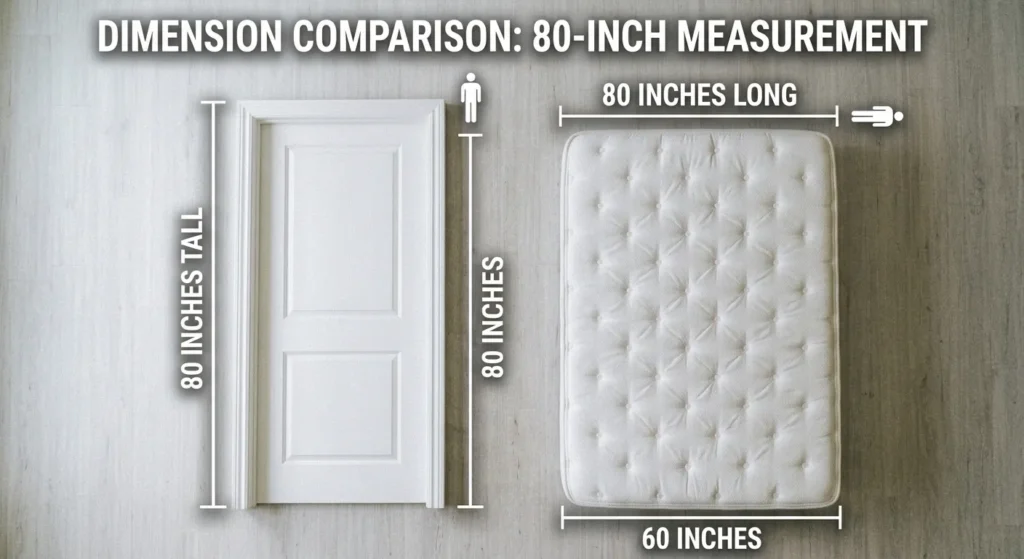
5. A Standard 80-Inch Interior Door Compared With Mattress Length
Many common U.S. interior doors are 80 inches tall. That is the same nominal length as a standard queen or king mattress, although the measurements describe different orientations.
A door is measured vertically, while mattress length runs from the head to the foot. The shared number helps you picture the span, but it does not mean a mattress will fit through a doorway.
Moving a mattress involves its thickness, flexibility, doorway width, and any tight turns in the hallway. Measuring the route is more reliable than comparing lengths alone.
6. A 4-by-8-Foot Plywood Sheet Compared With a King Mattress
A standard 4 × 8-foot plywood sheet measures 48 × 96 inches. A king mattress is 76 × 80 inches, so the sheet is narrower but longer.
This comparison is useful because a plywood sheet gives you a clear rectangular footprint. The king mattress extends 28 inches beyond the sheet’s width but is 16 inches shorter than its length.
Imagine the two rectangles on the floor: the plywood sheet looks long and narrow, while the king mattress is broader and closer to a square.

7. A 75-Inch TV Screen Compared With a Twin Mattress
A television advertised as 75 inches refers to its screen diagonal, not its width. A typical 16:9 75-inch TV has a screen approximately 65 inches wide and 37 inches tall, excluding the frame.
A twin mattress is 75 inches long, so it is longer than the TV screen is wide. This comparison is helpful because the same number—75 inches—can describe very different dimensions.
Always check whether a product’s size refers to diagonal, width, height, or length. Those measurements aren’t interchangeable.

8. A 6-by-9-Foot Rug Under a Queen Bed
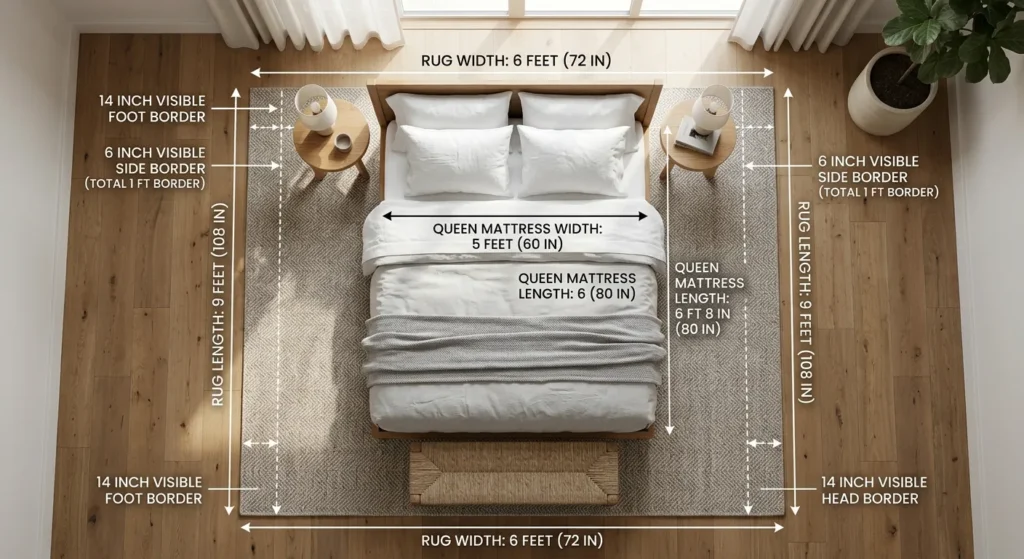
A 6 × 9-foot rug measures 72 × 108 inches. A queen mattress measures 60 × 80 inches, so the rug is 12 inches wider and 28 inches longer.
That extra area can leave a border of rug visible around parts of the bed, depending on its placement. The rug may extend beyond the sides and foot, creating a more finished look in the room.
Actual room layouts vary, and the bed frame may be wider or longer than the mattress. Before buying a rug, consider where the nightstands will sit and how much flooring you want to remain visible.
9. A Compact 36-Inch Desk Compared With Bed Width
Some compact desks are around 36 inches wide, close to the 38-inch width of a twin mattress. The twin mattress is only 2 inches wider than this example.
This gives you a practical reference for a small bedroom, where a twin bed and narrow desk may need to fit along different walls. The overall arrangement depends on the room’s shape and the clearance required for the chair.
Desk sizes vary widely, so treat 36 inches as an example rather than a universal desk dimension. If you have a specific desk, check its listed width for a more accurate comparison.

10. Two Adults Sharing a King Mattress
A king mattress is 76 inches wide. If two adults share it equally, each person gets the equivalent of 38 inches of width before accounting for pillows or any gap between sleepers.
That is the same nominal width as one standard twin mattress. The comparison helps explain why couples may appreciate a king when they want more individual sleeping space.
Actual comfort depends on body size, sleeping habits, and whether children or pets share the bed. The calculation is simply a way to visualize how the width is divided.

11. A California King Compared With a Standard King
A California king mattress measures 72 × 84 inches, while a standard king measures 76 × 80 inches. The California king is 4 inches narrower and 4 inches longer.
The difference is easy to miss in a store because the two mattresses have similar overall areas. Their shapes, however, are different: the California king is longer and slimmer.
This comparison matters most when selecting a bed for a tall sleeper or fitting furniture into a particular room. A standard king and a California king require different fitted sheets and appropriately sized bed frames.

12. A Bedroom Floor Marked With a Queen Mattress Footprint
A queen mattress occupies 60 × 80 inches, or approximately 33.33 square feet. Marking that rectangle on the floor gives you a direct sense of how much space the mattress alone requires.
This is one of the most useful comparisons before buying a bed. You can see whether a nightstand, wardrobe, dresser, or walking path will still fit once the mattress footprint is accounted for.
Use painter’s tape to mark the mattress’s dimensions and then outline the expected frame if its measurements are available. Leave additional space around the bed for practical movement and access to doors or drawers.

4. What Size Bed Do Most People Actually Need?
The best bed size is not always the largest one that fits. It depends on who will use it, how much space the bedroom offers, and whether the sleeper prefers a compact sleeping area or more room to spread out.
For one person
A twin is often suitable for children, teens, dorm rooms, and compact guest bedrooms. A Twin XL can be a better option for taller sleepers because it adds 5 inches of length while keeping the same width.
A full mattress gives a single sleeper 16 more inches of width than a twin. It may suit someone who wants extra room but doesn’t have space for a queen.
For couples
A queen mattress is 60 inches wide, giving two adults approximately 30 inches of width each if the space is divided evenly. A king provides 76 inches total, or 38 inches per person under the same simple calculation.
These figures don’t determine comfort on their own. Body size, movement during sleep, and personal preferences all influence whether a queen feels spacious enough.
For taller sleepers
A standard twin and full are 75 inches long. Twin XL, queen, and king mattresses are typically 80 inches long, while a California king is 84 inches long.
If a sleeper’s height is close to the mattress length, remember that pillows and sleeping position also affect usable space. Taller people may prefer a longer mattress to avoid feeling cramped.
For small bedrooms
A twin or full may leave more room for a desk, dresser, or play area. But the mattress is only part of the calculation: bed frames, headboards, and bedside tables can increase the total footprint.
Measure the bedroom and the furniture’s outer dimensions before choosing. Make sure drawers can open and there is enough room to walk around the bed safely.
5. Getting Bed Dimensions Without a Tape Measure
You can estimate bed sizes using familiar references, but these methods should be treated as visual aids rather than precise measurements.
Method 1: Use a Standard Sheet of Plywood
A common plywood sheet measures 4 × 8 feet, or 48 × 96 inches. Compare its footprint with the mattress size you are considering to picture the relative width and length.
Method 2: Compare With a 6-Foot Folding Table
A typical 6-foot folding table is 72 inches long. That is close to the 75-inch length of a standard twin or full mattress, making it a useful rough reference.
Method 3: Mark the Mattress Footprint With Tape
If you have painter’s tape and know the mattress dimensions, mark the width and length on the floor. This is more useful than estimating by eye because you can test where the frame and nearby furniture will go.
Method 4: Use Floor Tiles You Know the Size Of
If your floor tiles have a known dimension, count the tiles across and along the planned bed area. This can give you a reasonable estimate, but grout gaps, tile borders, and unknown tile sizes can introduce errors.
Method 5: Check the Manufacturer’s Bed Frame Dimensions
If you already have a bed frame or are considering one online, look for its external width and length. A frame is usually larger than the mattress, so its measurements are the most useful reference for room planning.
For an exact fit, use a measuring tape or another reliable measuring tool. Estimating is fine for initial planning, but a few inches can matter when a bed is close to a wall, wardrobe, or doorway.
6. FAQs About Bed Dimensions
What are standard bed dimensions?
Standard U.S. mattress dimensions range from twin at 38 × 75 inches to king at 76 × 80 inches. Other common sizes include Twin XL, full, queen, and California king, each with its own width and length.
How do I convert bed dimensions from inches to feet?
Divide the measurement in inches by 12 to calculate decimal feet. For feet and inches, divide by 12 to find the number of whole feet and use the remainder as inches. For example, 80 inches equals 6 feet 8 inches.
What are bed dimensions in centimeters?
The answer depends on the mattress size. A queen mattress measures 152.4 × 203.2 cm, while a king measures 193.04 × 203.2 cm.
Is a queen bed bigger than a full bed?
Yes. A standard queen mattress measures 60 × 80 inches, while a full measures 54 × 75 inches. The queen is 6 inches wider and 5 inches longer.
Is a king bed longer than a queen bed?
In standard U.S. sizes, both king and queen mattresses are typically 80 inches long. The king is wider: 76 inches compared with the queen’s 60 inches.
What is the difference between a king and California king?
A standard king is 76 × 80 inches, while a California king is 72 × 84 inches. The California king is narrower but longer, so it may suit people who need extra length.
Do bed frame dimensions match mattress dimensions?
Not always. A frame can extend beyond the mattress because of side rails, a headboard, a footboard, or decorative details. Check the product’s external measurements if you need to fit a bed into a specific room.
How much space should I leave around a bed?
There is no single clearance that works for every bedroom, but you should leave enough room to walk comfortably, open drawers, and access doors. Measure the room and the frame, then plan the furniture layout before purchasing.
7. Where That Leaves You
Bed dimensions become much easier to compare once you know the two numbers that matter most: width and length. A standard twin is 38 × 75 inches, a queen is 60 × 80 inches, and a king is 76 × 80 inches. In feet, those measurements are easy to picture as roughly 3 feet 2 inches by 6 feet 3 inches, 5 feet by 6 feet 8 inches, and 6 feet 4 inches by 6 feet 8 inches.
For a quick mental comparison, remember that a 6-foot folding table is close to the length of a twin mattress, while a king mattress can be made from two Twin XL mattresses placed side by side. These references help turn abstract numbers into familiar shapes.
Before buying, mark the mattress footprint on your floor and check the bed frame’s full external dimensions. A mattress may fit on paper, but the right bed is the one that leaves enough room for comfortable sleep and everyday movement.

Jack Harrison is a passionate writer who creates informative, engaging and easy-to-understand content for online readers. He enjoys researching new topics and sharing practical insights that help readers discover useful ideas and information.