
A queen mattress can look surprisingly spacious in a showroom, yet feel much larger or smaller once you bring it into your bedroom. The reason is simple: seeing a bed in a large furniture store is very different from fitting it between your walls, nightstands, and dresser.
The standard U.S. queen mattress measures 60 inches wide by 80 inches long. That gives two adults more width than a full mattress and five extra inches of length, while taking up less space than a king mattress.
These measurements matter when you’re buying a new bed, planning a bedroom layout, choosing sheets, or checking whether a mattress will fit through a doorway. The mattress itself is only part of the picture, since a bed frame and headboard can add several inches to the overall dimensions.
Queen mattress dimensions equal 5 feet wide by 6 feet 8 inches long, 152.4 cm by 203.2 cm, 1,524 mm by 2,032 mm, and 1.524 m by 2.032 m. Let’s put those numbers into perspective with familiar furniture and everyday objects.
Queen Mattress Dimensions in Every Unit
A queen mattress has two measurements to remember: 60 inches across and 80 inches from head to foot. The width tells you how much sleeping space you have side by side, while the length determines how much room you have to stretch out.
| Unit | Width | Length |
|---|---|---|
| Inches | 60 in | 80 in |
| Feet and inches | 5 ft | 6 ft 8 in |
| Decimal feet | 5 ft | 6.67 ft |
| Centimeters | 152.4 cm | 203.2 cm |
| Millimeters | 1,524 mm | 2,032 mm |
| Meters | 1.524 m | 2.032 m |
| Yards | 1.67 yd | 2.22 yd |
The conversion math is straightforward. To convert inches to feet, divide by 12. For centimeters, multiply inches by 2.54. Multiply the centimeter measurement by 10 to get millimeters, or divide it by 100 to get meters.
For example, 60 inches divided by 12 equals 5 feet. The 80-inch length equals 6 feet and 8 inches, or approximately 6.67 feet. In metric units, those dimensions are 152.4 cm wide and 203.2 cm long.
The mattress has a sleeping surface of approximately 33.3 square feet. That number describes the mattress footprint, not the total space needed for the bed, walking paths, or other bedroom furniture.
Keep in mind that these are standard U.S. queen mattress dimensions. Sizes can differ in other countries, and the outer dimensions of a mattress may vary slightly by manufacturer.
Where a Queen Mattress Fits on the Bed Size Chart
A queen sits between a full and a king in the common U.S. mattress-size range. It is wider than a full mattress but narrower than a king, making it a popular compromise for couples who want room to sleep without filling the entire bedroom with a bed.
| Mattress Size | Typical Width | Typical Length | Best-Known Feature |
|---|---|---|---|
| Twin | 38 in | 75 in | Compact single sleeper |
| Twin XL | 38 in | 80 in | Extra length for taller sleepers |
| Full | 54 in | 75 in | More width for one person |
| Queen | 60 in | 80 in | Popular size for couples |
| King | 76 in | 80 in | Extra width for two people |
| California King | 72 in | 84 in | Extra length with less width than a king |
A queen mattress is 6 inches wider and 5 inches longer than a full mattress. Compared with a standard king, it is 16 inches narrower while sharing the same typical 80-inch length.
That width difference can make a noticeable difference for couples. A queen provides about 30 inches of mattress width per person if two people split it evenly, although actual sleeping space depends on how each person sleeps.
The mattress size alone does not tell you how thick the bed will be. Mattress thickness varies by model, materials, and construction. If you’re checking whether a bed will fit beneath a window, against a headboard, or inside a frame, measure the height and outer dimensions separately.
12 Things That Help You Visualize Queen Mattress Dimensions
The numbers become easier to understand when you compare a queen mattress with familiar objects and spaces. The comparisons below use typical dimensions where possible; they are visualization aids rather than replacements for checking a product’s exact measurements.
1. A Full Mattress
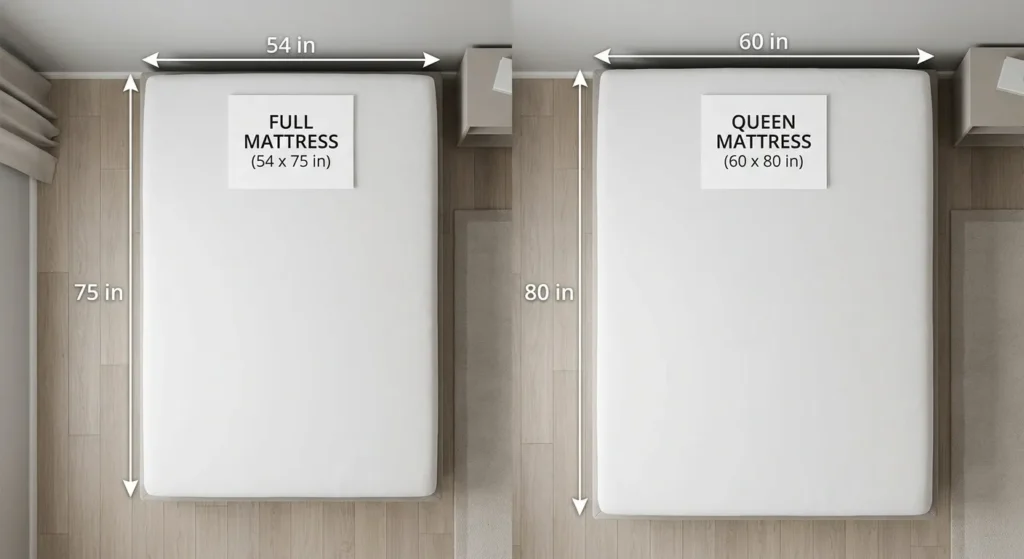
A full mattress measures about 54 inches wide by 75 inches long, compared with a queen’s 60 by 80 inches. That means the queen adds 6 inches across the width and 5 inches along the length.
Those extra inches may not sound dramatic, but they can help two people avoid feeling quite so close together. The difference is also noticeable when you compare the mattress footprints on a bedroom floor.
Picture a full mattress and imagine adding a 6-inch strip along one side and another 5 inches at the foot. That gives you a practical sense of the additional area a queen requires.
2. A Standard King Mattress
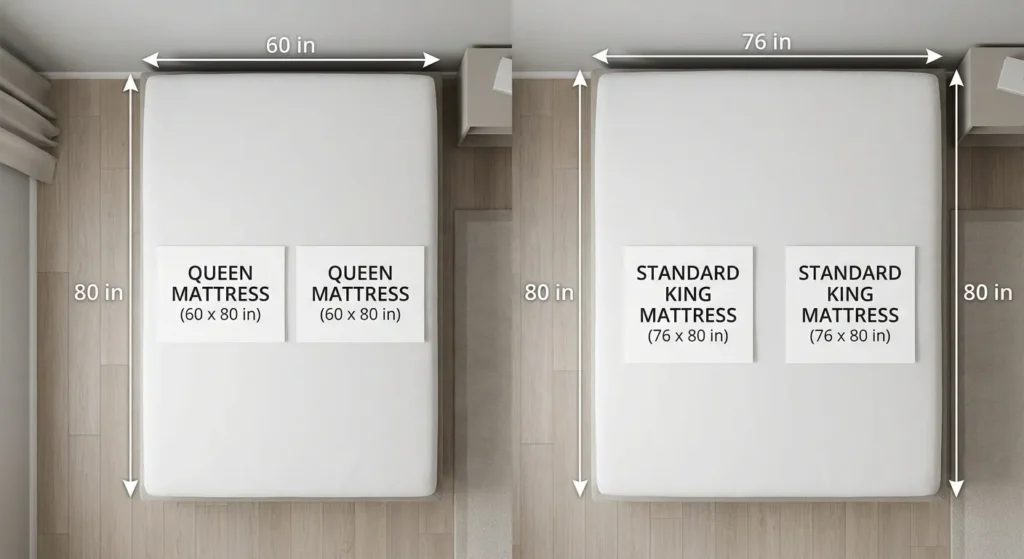
A standard U.S. king mattress is typically 76 inches wide and 80 inches long. It shares the queen’s length but adds 16 inches of width.
That extra width is useful for couples who want more personal sleeping space or for families who sometimes share the bed with a child. The trade-off is that the king occupies a broader area of the room.
Imagine placing a 16-inch-wide strip alongside a queen mattress. That strip represents the extra width of a king, roughly the width of a small bedside shelf or a narrow side table.
3. Two Twin XL Mattresses Side by Side
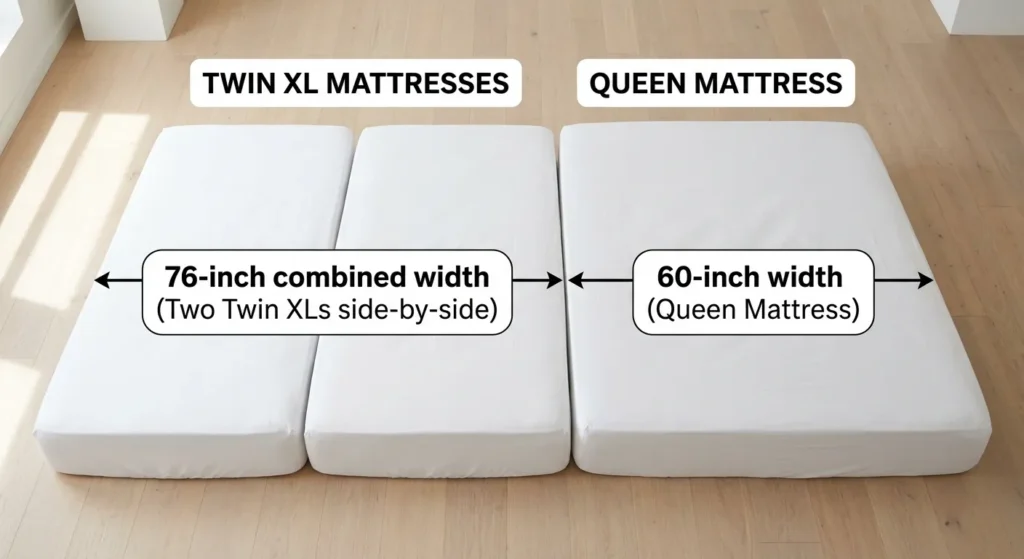
A twin XL mattress is typically 38 inches wide and 80 inches long. Place two of them side by side and you get a combined surface measuring 76 by 80 inches, which matches the usual footprint of a standard king mattress.
This is the principle behind many split-king setups, although the exact mattress construction and bed frame determine how the two halves fit together. Two twin XL mattresses are not the same width as a queen: together, they are 16 inches wider.
The comparison is useful because twin XL mattresses are common in college dorms and adjustable-bed systems. Imagine two long single mattresses next to each other, with the combined width extending well beyond a queen’s 60 inches.
4. A Six-Foot-Tall Adult
A person who is 6 feet tall measures 72 inches, while a queen mattress is 80 inches long. The mattress is therefore 8 inches longer than that person’s height.
This comparison is especially useful when you’re trying to judge whether a queen gives you enough length. A 6-foot adult has some extra room at the ends when lying straight, though pillow placement and sleeping posture affect how much usable space remains.
Imagine lying down with your head near one end of the mattress. The remaining length is not a large empty zone, but the 8-inch difference gives a helpful starting point for visualizing the fit.

5. A Standard Interior Doorway
Many U.S. interior door slabs are around 30 or 32 inches wide, though door sizes vary. A queen mattress is 60 inches wide, which is close to the width of two 30-inch door slabs placed side by side.
This does not mean a queen mattress cannot pass through a doorway. Mattresses are flexible to varying degrees, and maneuvering space, hallway turns, ceiling height, and the mattress’s construction all matter. Foam mattresses may bend more readily than some traditional innerspring models, but follow the manufacturer’s handling instructions.
For a simple visual, picture two 30-inch door widths next to each other. Together, they approximate the queen’s width when the mattress is laid flat.

6. A Five-Foot Sofa
A compact sofa measuring about 60 inches wide has roughly the same width as a queen mattress. The difference is in the shape: a sofa has a backrest and depth, while a mattress is a flat sleeping surface.
This comparison helps if you have trouble picturing 60 inches across a room. A small two-seat loveseat may be close to this width, although many sofas are wider and dimensions vary by style.
Imagine the width of a compact sofa from one armrest to the other. That span gives you a practical estimate of how wide a queen mattress is from side to side.

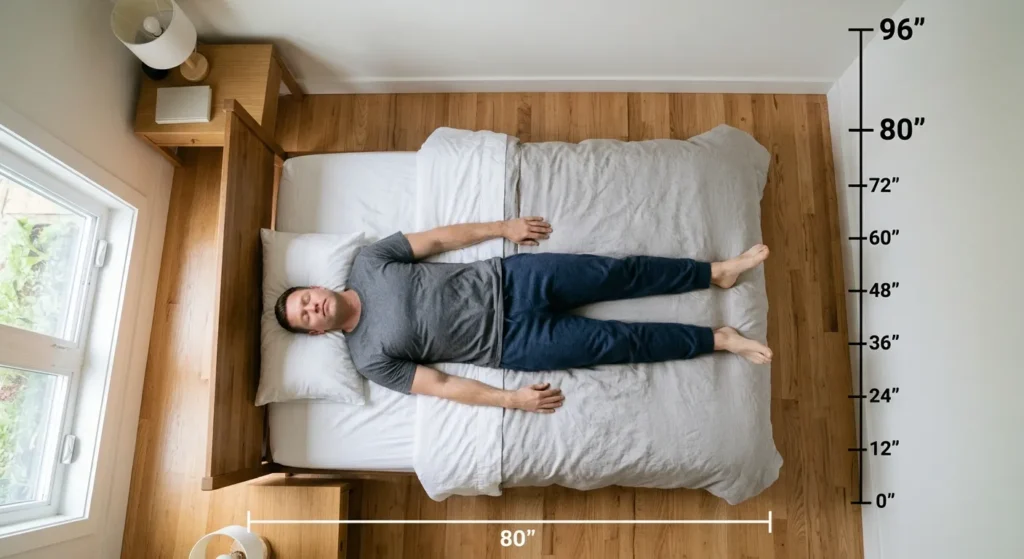
7. A Standard Eight-Foot Ceiling
An 8-foot ceiling is 96 inches high, while a queen mattress is 80 inches long. The ceiling measurement is 16 inches greater than the mattress length.
Although one measurement is vertical and the other is horizontal, the comparison can help you visualize the scale of an 80-inch object. If you imagine the mattress length extending up a wall, it would cover most of the height of a typical 8-foot room.
This is a mental comparison rather than a suggestion to stand a mattress upright. The important point is that 80 inches is more than six and a half feet, so a queen is a substantial rectangle rather than a compact bed surface.
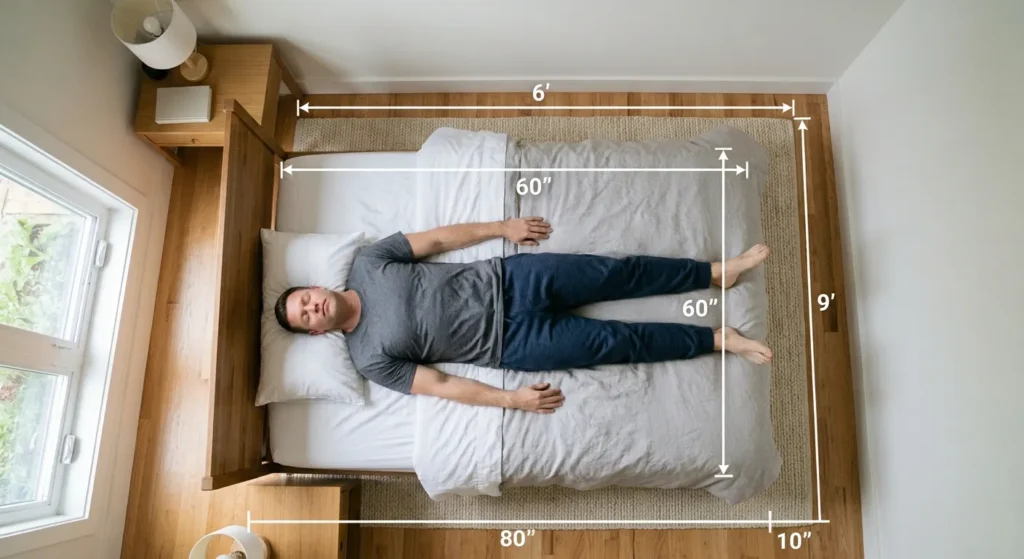
8. A Six-by-Nine-Foot Area Rug
A 6-by-9-foot rug measures 72 by 108 inches. A queen mattress measures 60 by 80 inches, so the rug is 12 inches wider and 28 inches longer.
That makes the rug a useful reference for understanding the mattress footprint. If you place a queen mattress over the rug, the rug can extend beyond it, but the exact border depends on how you position it.
The comparison is particularly helpful when planning a bedroom. It shows that a queen mattress fits within a 6-by-9-foot rectangle, but that does not include a bed frame, bedside tables, or the walking space you need around the bed.
9. A Standard Eight-Foot Sheet of Plywood
A common construction plywood sheet measures 4 by 8 feet, or 48 by 96 inches. Compared with a queen mattress, the sheet is 12 inches narrower and 16 inches longer.
This comparison gives you a large, familiar rectangle to picture. The plywood sheet is not the same shape as a queen mattress, but its overall length makes the 80-inch mattress dimension easier to imagine.
Plywood is usually sold in sheets with nominal dimensions close to 4 by 8 feet, although actual dimensions and thickness can vary. Think of the mattress as a shorter, wider rectangle than the plywood sheet.

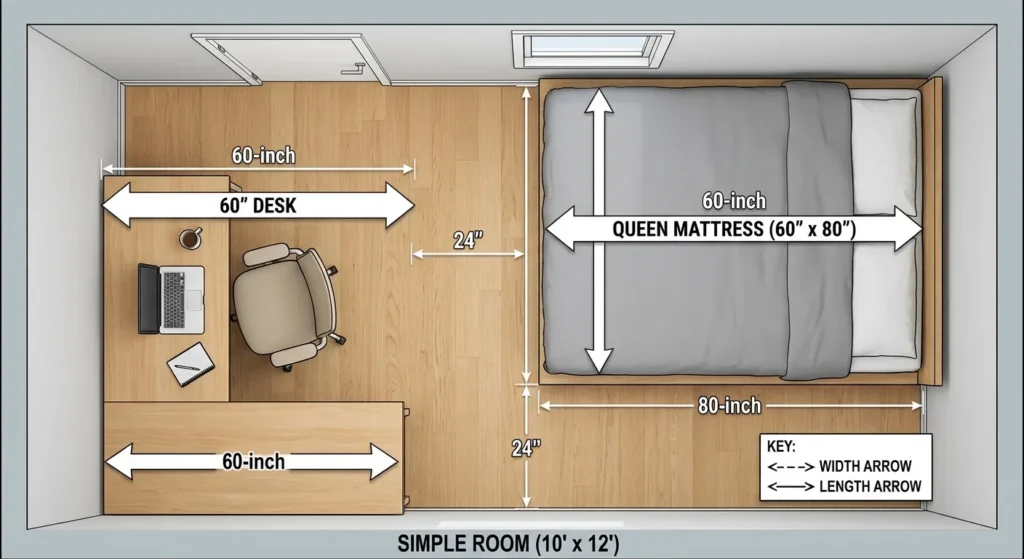
10. A Standard Desk That Is About Five Feet Wide
Some home-office desks measure around 60 inches wide, which is the same as the width of a queen mattress. Desk depths vary considerably, often making the desk much narrower from front to back than a mattress is from head to foot.
A 60-inch desk is a helpful comparison when planning furniture placement because many people already know how much wall space a broad desk takes up. A queen mattress has that same side-to-side span, but it extends 80 inches in the other direction.
If you have a desk close to five feet wide, imagine turning that measurement into the width of a bed. The length of the mattress then stretches another 20 inches beyond a 60-inch square.
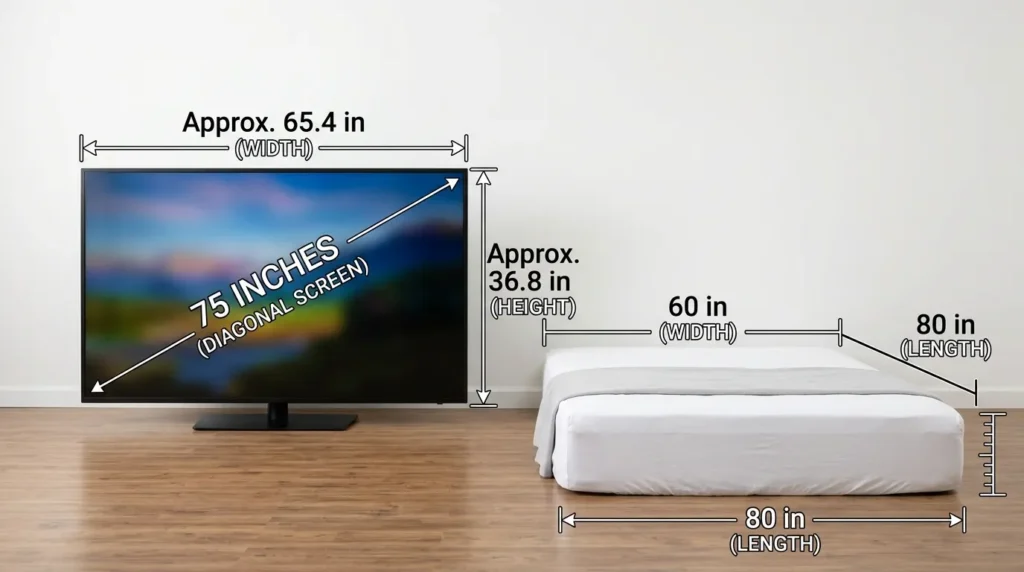
11. A 75-Inch Television Screen
A television marketed as 75 inches is measured diagonally across the screen, not across its width. A typical 16:9 screen of that size is approximately 65.4 inches wide and 36.8 inches tall, excluding the frame and stand.
That means the screen is a little wider than the queen mattress is across its 60-inch width, but it is much shorter than the mattress’s 80-inch length. This is a useful comparison because screen sizes are often quoted as a single diagonal number.
Imagine a large TV screen placed across the width of a queen mattress. The screen would extend a few inches beyond each side if centered, while its height would cover less than half the mattress length.
12. Two Five-Foot Measuring References
A five-foot span equals 60 inches, exactly the standard width of a queen mattress. The length is 80 inches, or 6 feet 8 inches, so it is one foot and eight inches longer than the width.
You can use this relationship to picture the mattress as a rectangle that is noticeably longer than it is wide. Its length is four-thirds of its width, making the overall shape easy to recognize even without a diagram.
Imagine marking out a five-foot line across the floor, then extending another line to 6 feet 8 inches. Connecting those lengths at right angles gives you the queen mattress’s basic footprint.

What Size Room Do You Need for a Queen Mattress?
A queen mattress measures 5 by 6 feet 8 inches, but a bedroom needs more space than the mattress alone occupies. You’ll want room to get in and out of bed, open drawers, move around the foot of the bed, and accommodate other furniture.
A room around 10 by 10 feet is sometimes used as a compact planning reference for a queen bed, but whether it feels comfortable depends on the door position, closet, windows, bed frame, and bedside furniture. A larger room generally makes it easier to arrange the bed without blocking walking paths.
Before buying a mattress, measure the room and the route into it. Check door openings, hallway turns, stairs, and any tight corners. A mattress may fit inside the bedroom but still be difficult to carry through the house.
Also distinguish mattress dimensions from bed-frame dimensions. A thick headboard, footboard, or projecting side rails can make the complete bed several inches larger than the 60-by-80-inch sleeping surface. Check the manufacturer’s overall dimensions if you’re working with a tight fit.
Getting to Queen Mattress Dimensions Without a Tape Measure
If you don’t have a measuring tape handy, you can still estimate a queen mattress’s size using familiar references. These methods are helpful for rough planning, but use a proper measuring tool before purchasing a bed or arranging furniture in a tight space.
- Use a five-foot reference for the width. The queen mattress is exactly 5 feet wide. If you have a known five-foot desk or a measured section of wall, compare that span with the mattress width.
- Mark out six feet and eight inches for the length. The mattress is 80 inches long. A six-foot span gets you most of the way there, but you’ll need another 8 inches to reach the full length.
- Compare it with a full mattress. If you already have a standard full mattress, a queen adds 6 inches of width and 5 inches of length. This comparison is only reliable when you know the existing mattress’s size.
- Use floor tiles only if you know their dimensions. Count the tiles across the width and length, then multiply by the actual tile size. Do not assume every tile is 12 inches; common floor tiles come in many sizes.
- Check the mattress label or product specifications. If the mattress is already in your home, the manufacturer’s tag or product listing may identify its size. This is often more dependable than estimating by eye.
For exact planning, measure the mattress from edge to edge, then measure the bed frame separately. A few inches can matter when you’re fitting the bed between walls or alongside a wardrobe.
FAQs
How many feet are queen mattress dimensions?
A standard U.S. queen mattress is 5 feet wide and 6 feet 8 inches long. In decimal feet, that is approximately 5 by 6.67 feet.
How many centimeters is a queen mattress?
A typical U.S. queen mattress measures 152.4 cm wide by 203.2 cm long. These figures convert the standard 60-by-80-inch size into metric units.
How many millimeters is a queen mattress?
A queen mattress is typically 1,524 mm wide and 2,032 mm long. These are the metric equivalents of 60 inches by 80 inches.
How many meters is a queen mattress?
A standard queen mattress is 1.524 meters wide and 2.032 meters long. For quick planning, you can round those numbers to about 1.52 by 2.03 meters, while using exact measurements when space is tight.
Is a queen mattress bigger than a full mattress?
Yes. A queen is typically 60 by 80 inches, while a full is 54 by 75 inches. The queen gives you 6 additional inches of width and 5 additional inches of length.
Is a queen mattress big enough for two adults?
A queen is a common choice for two adults and gives each person about 30 inches of width if the sleeping surface is split evenly. Whether it feels roomy enough depends on each person’s size, sleeping habits, and preference for personal space.
Will a queen mattress fit in a 10-by-10-foot room?
A queen mattress can fit within a 10-by-10-foot room, but the available space for other furniture may be limited. Check the bed frame’s outer dimensions, door swing, closet access, and walking clearance before deciding on the layout.
Are all queen mattresses exactly 60 by 80 inches?
The standard U.S. queen size is 60 by 80 inches, but actual products can vary slightly. Always check the manufacturer’s specifications, especially when buying sheets, a bed frame, or a mattress for a tightly fitted space.
Where That Leaves You
The standard U.S. queen mattress measures 60 inches wide by 80 inches long—or 5 feet by 6 feet 8 inches, equivalent to 152.4 by 203.2 cm. It is wider and longer than a full mattress but 16 inches narrower than a standard king.
For an easy mental picture, start with the width of a compact 60-inch sofa, then imagine extending that span to 80 inches in the other direction. That gives you a useful sense of the mattress’s rectangular footprint.
Before you buy, remember to measure more than the mattress. Your bed frame, headboard, room layout, and path through the house can all affect whether a queen is the right fit.

Jack Harrison is a passionate writer who creates informative, engaging and easy-to-understand content for online readers. He enjoys researching new topics and sharing practical insights that help readers discover useful ideas and information.