
A refrigerator can look perfectly aligned with your kitchen cabinets in a showroom and still stick out farther than expected once you bring it home. The difference often comes down to a few inches of depth, plus the space needed for doors, handles, and ventilation.
Counter-depth refrigerators are designed to create a more built-in appearance without necessarily requiring a fully custom refrigerator. Most models have a cabinet depth of roughly 24–30 inches, although the exact measurement depends on the model and whether you include the doors and handles.
For many shoppers, the most useful starting point is a refrigerator around 36 inches wide, 24–25 inches deep at the cabinet, and 68–72 inches tall. These are common approximate dimensions, not universal specifications.
A counter-depth refrigerator measuring 24 inches deep equals 2 feet, 60.96 centimeters, 609.6 millimeters, and 0.6096 meters. Understanding that depth—and how it differs from the refrigerator’s total depth—can help you determine whether a model will fit your kitchen and leave enough room to open its doors.
Counter Depth Refrigerator Dimensions in Every Unit
Counter-depth refrigerators do not have one universal set of dimensions. Width, height, and depth vary with the brand, door configuration, ice maker, and storage capacity.
For a useful starting point, consider a refrigerator with an approximate 24-inch cabinet depth. This table converts that measurement into commonly used units.
| Unit | Equivalent measurement |
|---|---|
| Inches | 24 in |
| Feet | 2 ft |
| Centimeters | 60.96 cm |
| Millimeters | 609.6 mm |
| Meters | 0.6096 m |
| Yards | 0.667 yd |
These are conversions of the depth measurement only. They do not describe the complete refrigerator’s width or height.
Typical Counter-Depth Refrigerator Dimensions
Here is an approximate planning range for many residential models. Always check the specification sheet for the particular refrigerator you intend to buy.
| Dimension | Common approximate range |
|---|---|
| Width | 30–36 inches |
| Cabinet depth | 24–30 inches |
| Height | 68–72 inches |
| Depth including doors and handles | Often around 28–34 inches or more |
Some models fall outside these ranges, especially compact units and models with unusually deep doors or handles.
How the Conversions Work
The math is straightforward:
- Inches to feet: Divide inches by 12. For example, 24 ÷ 12 = 2 feet.
- Inches to centimeters: Multiply inches by 2.54. For example, 24 × 2.54 = 60.96 cm.
- Inches to millimeters: Multiply inches by 25.4. For example, 24 × 25.4 = 609.6 mm.
- Inches to meters: Multiply inches by 0.0254. For example, 24 × 0.0254 = 0.6096 meters.
When comparing counter-depth refrigerator dimensions in feet, inches, or centimeters, make sure you’re comparing the same part of each appliance. A 24-inch cabinet depth is not necessarily the same as a 24-inch total depth once the doors and handles are included.
Where Counter-Depth Refrigerators Fit on a Size Chart
The main difference between a counter-depth refrigerator and a standard-depth refrigerator is how far the appliance projects into the kitchen.
Many kitchen counters are approximately 24–25 inches deep, although countertop overhangs and cabinet designs vary. Counter-depth refrigerators are designed to sit closer to the surrounding cabinetry, particularly when their doors and handles are accounted for in the kitchen layout.
A standard-depth refrigerator may extend noticeably beyond the counter. That extra projection can provide more interior storage, but it may also make a narrow kitchen feel crowded.
Understanding the Three Main Measurements
Width is the measurement from one side of the refrigerator to the other. A 36-inch-wide model is common, but 30-, 33-, and other widths are also available.
Height is measured from the bottom of the appliance to its highest point. If the refrigerator has a top hinge or other components that extend upward, check the manufacturer’s specified overall height.
Depth needs more attention because manufacturers may list cabinet depth, depth with doors, and depth with handles separately.
| Depth measurement | What it tells you |
|---|---|
| Cabinet depth | Depth of the main refrigerator body |
| Depth with doors | Projection when the doors are included, but handles may be excluded |
| Depth with handles | Overall front-to-back projection including handles |
| Required installation depth | Space needed after accounting for the installation instructions and clearances |
A refrigerator with a 24-inch cabinet depth may still project several inches beyond the countertop once the doors and handles are included.
Also remember that counter depth does not automatically mean flush installation. The final appearance depends on your cabinetry, counter overhang, door design, and installation requirements.
12 Real-World Comparisons to Visualize Refrigerator Dimensions
The easiest way to picture a refrigerator’s dimensions is to compare its width, depth, and height with objects you already know. These examples are practical reference points rather than exact substitutes for measuring your kitchen.
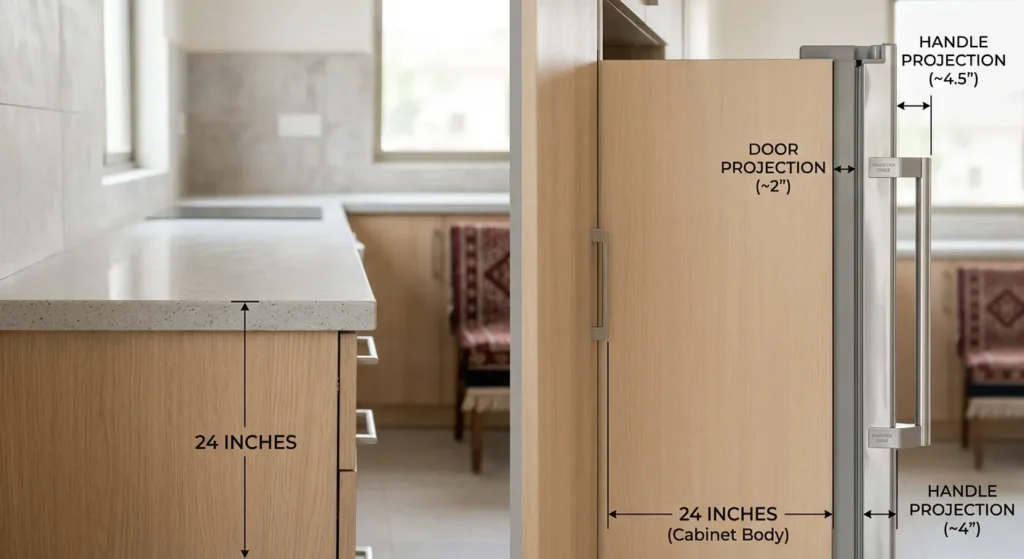
1. A Standard Kitchen Countertop
Many kitchen countertops are approximately 24–25 inches deep. That makes a 24-inch refrigerator cabinet a useful comparison because the main body can sit close to the counter’s front edge.
The resemblance is not always exact. Countertops may have a front overhang, while refrigerator doors and handles extend forward from the cabinet body.
For example, a refrigerator with a 24-inch cabinet depth and a 3-inch door-and-handle projection would have an overall depth of about 27 inches, before any additional installation considerations.
Picture the refrigerator body tucked near the counter line, with the doors extending slightly beyond it.
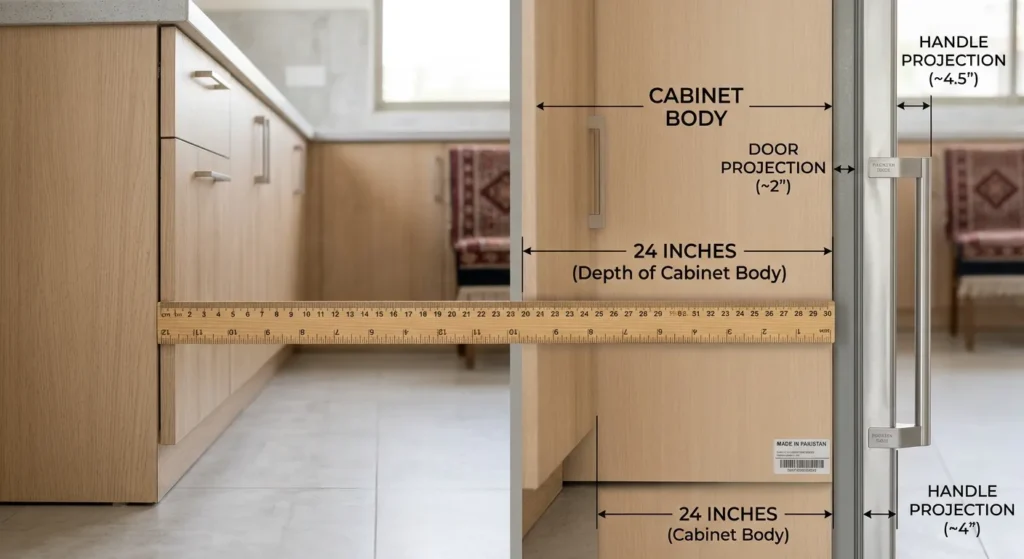
2. A Two-Foot Ruler or Measuring Stick
Two feet equals exactly 24 inches, so a two-foot measuring stick is a direct way to visualize the cabinet depth used in our conversion example.
This is a reference for depth, not the complete size of the refrigerator. A refrigerator can be two feet deep at the cabinet while standing around six feet tall and spanning roughly three feet across.
A rigid measuring stick can help you compare the appliance’s cabinet depth with the counter, although the actual appliance must still be measured at the correct points.
Imagine placing a two-foot stick from the back wall toward the front edge of the refrigerator body.
3. A 36-Inch-Wide Kitchen Range
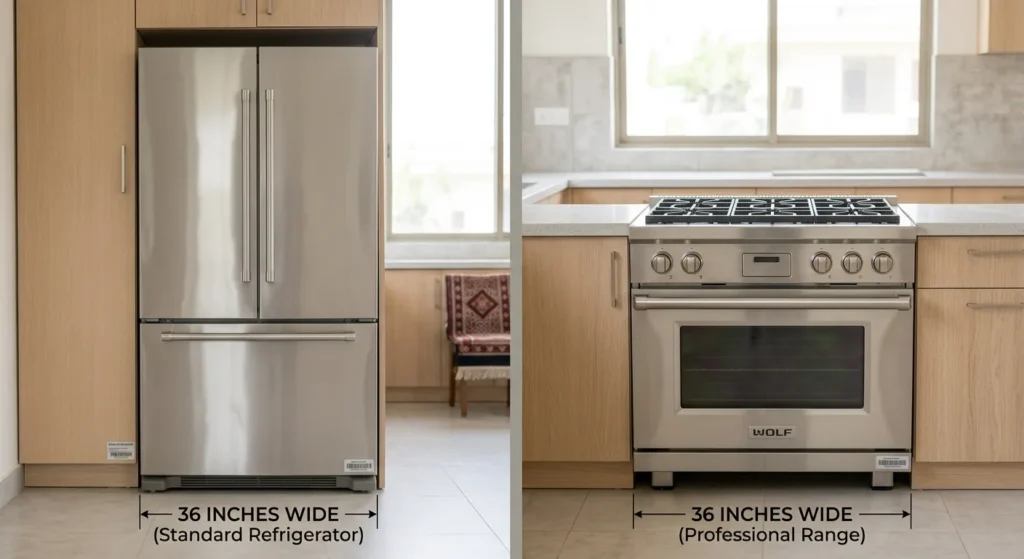
Many full-size kitchen ranges are approximately 30 inches wide, while some larger models are 36 inches wide. A 36-inch range provides a useful comparison for a refrigerator of the same width.
The refrigerator will usually be much taller and deeper than the range, so this comparison is specifically about width.
Kitchen ranges come in several sizes, and their handles or control panels may add to their overall dimensions. Check the appliance specifications rather than assuming every range measures 36 inches.
Visualize two appliances sharing a similar side-to-side footprint, with the refrigerator rising much higher.
4. A Standard Interior Doorway
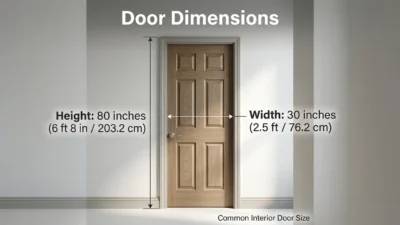
Many interior door slabs are around 30–32 inches wide, while some are wider. A 30- or 32-inch doorway can therefore help you picture the width of a narrower counter-depth refrigerator.
The important catch is that the doorway’s clear opening may be smaller than the nominal door size. The frame, hinges, door position, and nearby walls can all affect how much space is actually available.
A refrigerator that fits within a doorway’s width on paper may still be difficult to maneuver through it, particularly when turning into a hallway or kitchen.
Imagine standing a refrigerator beside an open doorway and comparing the width—not assuming it will automatically pass through.

5. A Six-Foot-Tall Person
A person who is six feet tall measures 72 inches from head to foot. Many counter-depth refrigerators are roughly 68–72 inches tall, making this a helpful height comparison.
That does not mean every refrigerator reaches exactly the height of a six-foot person. Some models are shorter, and some are taller, particularly when hinges or other upper components are included.
Height also matters when fitting a refrigerator under overhead cabinets. You need to account for any top clearance specified by the manufacturer.
Picture a six-foot person standing upright beside the appliance. The top of the refrigerator may sit around head height, depending on the model.

6. A Standard Refrigerator-Freezer Cabinet Opening
Kitchen designers often plan a dedicated opening between cabinets for a refrigerator. The opening must accommodate the appliance’s width and height while leaving the clearances required by the manufacturer.
A refrigerator that is 36 inches wide will not necessarily fit comfortably into a 36-inch opening. The required space may be greater, depending on the installation instructions, ventilation needs, and how the doors open.
This is why the product’s nominal width and the required cutout or opening dimensions should never be treated as interchangeable.
Think of the refrigerator opening as a space that must be slightly more accommodating than the appliance itself wherever the manufacturer’s instructions call for clearance.

7. A 24-Inch Dishwasher
Many standard built-in dishwashers are designed for an opening approximately 24 inches wide. That makes the dishwasher’s width a convenient reference for understanding a two-foot measurement.
The comparison applies to width, not depth. A dishwasher and a refrigerator have different shapes, functions, and installation requirements.
Dishwashers are usually installed below the counter, while refrigerators are much taller and have different ventilation and door-clearance needs.
Imagine the dishwasher’s side-to-side width as roughly equal to the 24-inch cabinet depth of the example refrigerator. The two measurements are numerically similar, even though they describe different directions.
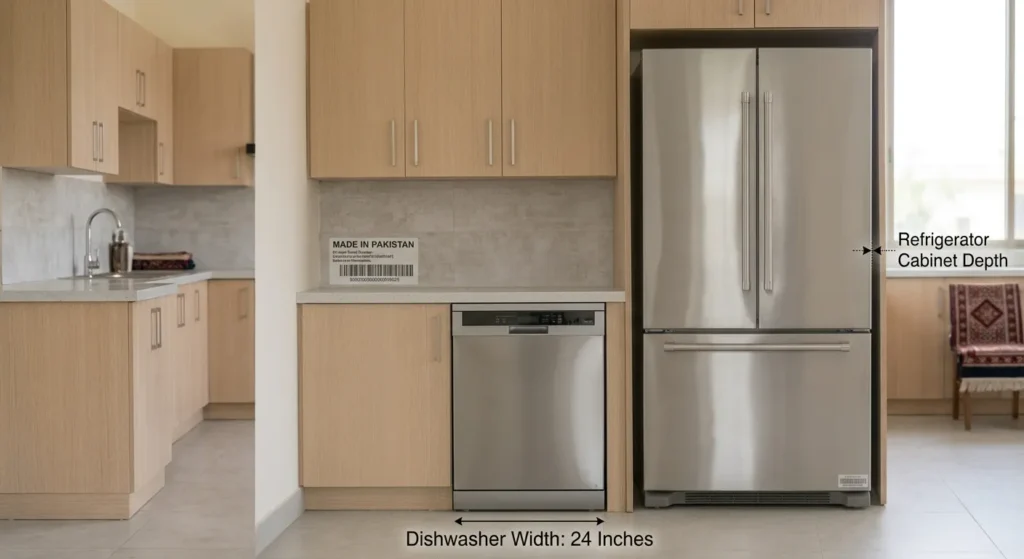
8. A 30-Inch-Wide Refrigerator Model
A 30-inch-wide counter-depth refrigerator is narrower than a 36-inch model by six inches, or half a foot. That difference can matter in a small kitchen where every inch of cabinet space counts.
A narrower model may be suitable for a compact household or a restricted installation opening, but width alone does not determine storage capacity. Interior layout, height, shelf design, and freezer configuration all affect usable space.
Door swing also matters. Even if the refrigerator fits the opening, nearby walls or cabinets may prevent the doors from opening as far as needed.
Picture the 30-inch model as a refrigerator that is two and a half feet wide—noticeably narrower than a typical 36-inch version.
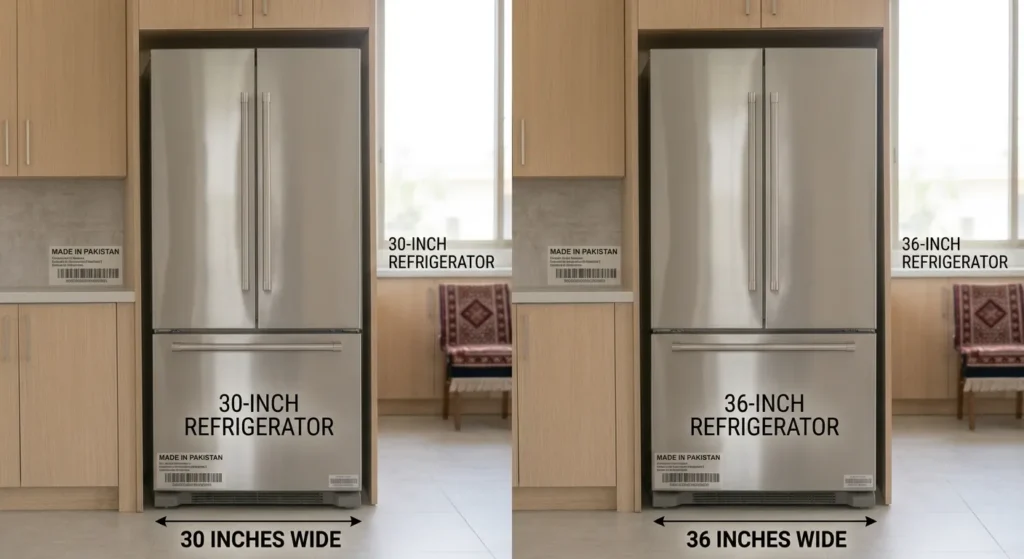
9. A 36-Inch-Wide Counter-Depth Refrigerator
A 36-inch-wide model is three feet across. This is a common width for many full-size French-door and side-by-side refrigerators, although available configurations vary.
The three-foot width can offer substantial storage without taking up as much front-to-back space as some standard-depth models. However, interior capacity depends on the model rather than width alone.
Before choosing one, check the cabinet opening, nearby walls, island clearance, and door swing. A refrigerator can fit between two cabinets but still make the kitchen awkward to use if the doors block a walkway.
Imagine a three-foot-wide rectangle standing roughly six feet tall and about two feet deep at the cabinet body.

10. A 12-Inch Kitchen Cabinet Depth Reference
Some wall cabinets are approximately 12 inches deep, though actual cabinetry varies. Two such depths placed end to end would total 24 inches.
This is a simple way to visualize the difference between a one-foot measurement and a two-foot measurement. It also helps explain why a counter-depth refrigerator is not as shallow as a typical wall cabinet.
Do not use this comparison to plan the refrigerator opening: wall cabinets, base cabinets, counters, and appliances serve different purposes and may have different depth standards.
Picture two one-foot lengths lined up front to back. Together, they create the 24-inch depth used in our main conversion example.

11. A 72-Inch Storage Shelf
A six-foot storage shelf is 72 inches tall, making it a useful reference for the height of a refrigerator near the upper end of the common range.
The comparison is particularly helpful if you are checking whether the appliance will fit beneath a cabinet or bulkhead. The refrigerator’s highest point, however, must be checked against the exact product specifications.
A shelf and refrigerator are shaped differently, so this comparison is only about vertical height.
Picture a six-foot shelf beside the appliance. If the refrigerator is about 70 inches tall, its top would sit slightly below the shelf’s 72-inch height.

12. A Standard 8-Foot Kitchen Ceiling
An eight-foot ceiling is 96 inches high. If a refrigerator stands about 70 inches tall, the simple difference is 26 inches between the appliance top and the ceiling.
That does not mean you will have 26 inches of usable space above the refrigerator. Upper cabinets, trim, ventilation requirements, and installation access can occupy some of that gap.
The ceiling comparison is useful when planning the vertical layout, but the refrigerator must also fit beneath any cabinet directly above it.
Imagine a 70-inch refrigerator beneath a 96-inch ceiling. The remaining vertical space is about 26 inches before accounting for cabinetry or other obstructions.

What Does Counter Depth Actually Mean?
The phrase counter depth describes the refrigerator’s cabinet-body depth relative to typical kitchen counters. It does not guarantee that the entire appliance—including doors and handles—will be perfectly flush with the countertop.
For example, consider a model with these approximate measurements:
| Part measured | Example depth |
|---|---|
| Refrigerator cabinet body | 24 inches |
| Doors included | 28 inches |
| Handles included | 30 inches |
These figures are illustrative only, not the specifications of a particular model. They show how a refrigerator listed with a 24-inch cabinet depth could project about 30 inches from the wall once its doors and handles are included.
Counter-Depth vs. Standard-Depth Refrigerators
Counter-depth models are generally chosen for a streamlined kitchen appearance. Standard-depth models often project farther into the room, but they may offer more interior storage for a similar width.
Neither type is automatically the better choice. Your decision depends on the available space, storage needs, budget, and preferred appearance.
Before ordering, check these four items:
- Overall width: Include any protruding side components.
- Overall height: Check the top hinge or other highest point.
- Total depth: Confirm whether the stated number includes doors and handles.
- Required clearances: Follow the installation guide for ventilation, door opening, and service access.
Measure the Route Into Your Kitchen
The refrigerator’s final opening is only one part of the fitting process. Measure the delivery route too, including the front door, hallway, corners, stairways, and kitchen entrance.
Some refrigerator doors or handles may be removable for delivery, but this depends on the model. Ask the retailer or installer before relying on that option.
A few minutes spent checking the route can prevent a refrigerator from arriving at a doorway it cannot pass through.
How to Estimate Refrigerator Dimensions Without a Tape Measure
You can get a rough sense of counter-depth refrigerator dimensions using familiar references, but use an actual measuring tool before purchasing or installing an appliance.
1. Use a Two-Foot Reference
A 24-inch cabinet depth is exactly two feet. A ruler, yardstick with a known scale, or two one-foot reference lengths can help you visualize that distance.
This only estimates the cabinet depth. It will not account for the doors and handles that extend farther forward.
2. Compare It With Your Kitchen Counter
If your counter is close to 24–25 inches deep, it offers a useful visual reference. Stand beside the refrigerator opening and look at how far a 24-inch line would extend from the wall.
Remember that a counter’s front overhang may make it deeper than the cabinet beneath it.
3. Use a Doorway to Estimate Width
A familiar doorway can help you picture a 30- or 32-inch width. However, door slabs, frames, and clear openings are not always the same size, so this is an approximate visual aid rather than a reliable installation measurement.
4. Compare the Height With a Six-Foot Person
A six-foot person is 72 inches tall. Standing beside a refrigerator gives you a quick sense of whether a model is near five and a half feet, six feet, or taller.
Do not rely on this method to confirm whether the refrigerator fits beneath an overhead cabinet.
5. Check the Manufacturer’s Dimension Drawing
The most dependable method is to download the model’s dimension sheet. Look for separate measurements for the cabinet body, doors, handles, hinges, and required installation clearances.
When you are ready to buy, confirm the opening and the delivery route with a tape measure. Visual comparisons help you understand the size; they cannot replace an exact measurement.
FAQs About Counter Depth Refrigerator Dimensions
How deep is a counter-depth refrigerator in inches?
Many counter-depth refrigerators have a cabinet depth of approximately 24–30 inches. The total depth including doors and handles can be greater, so always check which measurement the manufacturer lists.
How many feet is a 24-inch refrigerator depth?
Twenty-four inches equals exactly 2 feet. This is a useful reference for the cabinet depth of some counter-depth refrigerator models.
How many centimeters is 24 inches?
Twenty-four inches equals 60.96 centimeters. In millimeters, the same measurement is 609.6 mm.
How wide is a counter-depth refrigerator?
Many residential models are approximately 30–36 inches wide, although narrower and wider options exist. The exact width depends on the model and door configuration.
How tall is a counter-depth refrigerator?
Many full-size models are roughly 68–72 inches tall. Check the manufacturer’s overall-height measurement, including any top hinges or components that extend above the cabinet.
Is a counter-depth refrigerator flush with the cabinets?
Not necessarily. The cabinet body may sit close to the counter line, but the doors and handles often project beyond it. The finished appearance depends on the appliance design and your kitchen layout.
Does counter depth mean the refrigerator has less storage?
It can. Counter-depth models often trade some front-to-back interior space for a shallower profile, although actual capacity varies by model, width, height, and interior layout.
How much space should I leave around a counter-depth refrigerator?
The required clearance varies by model and installation method. Follow the manufacturer’s instructions for side, top, and rear clearances, and account for door swing and ventilation rather than assuming one clearance fits every refrigerator.
Where That Leaves You
Counter depth is about more than a single number. A refrigerator with a 24-inch cabinet depth measures 2 feet, 60.96 cm, 609.6 mm, or 0.6096 meters at the cabinet body, but its doors and handles may add several more inches to the total depth.
A kitchen countertop around 24–25 inches deep is the most useful everyday comparison for visualizing the cabinet depth. A two-foot measuring stick makes the same measurement easy to picture.
Before buying, check the complete width, height, depth with handles, door swing, installation clearances, and delivery route. The right measurements will help your new refrigerator fit both your kitchen and your daily routine.

Jack Harrison is a passionate writer who creates informative, engaging and easy-to-understand content for online readers. He enjoys researching new topics and sharing practical insights that help readers discover useful ideas and information.