Most people have felt that sudden moment of frustration at a printer tray when a sheet of paper sticks out three inches farther than expected. You press print on a contract or court document, only to realize your standard printer setup is choking on a sheet that refuses to match the rest of your office stack.
That extra length is what sets legal paper apart. While standard Letter paper feels instantly familiar in our hands, adding three extra inches to its length changes its proportions entirely, transforming a squat, versatile rectangle into a long, formal canvas designed for dense text.
Whether you are preparing legal agreements, drafting real estate contracts, configuring digital print layouts, or organizing file cabinets, understanding these exact measurements ensures your documents fit both physical folders and printer trays without awkward scaling errors.
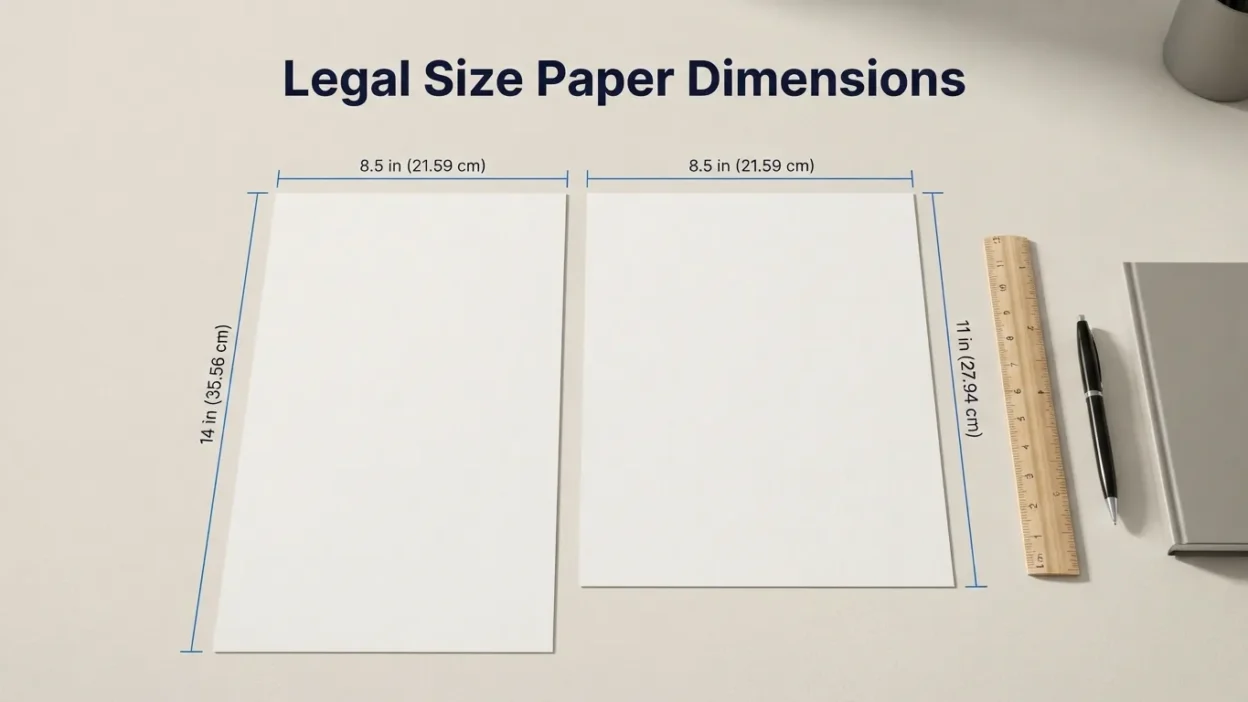
This guide breaks down every conversion for legal size paper dimensions, shows how it fits into the broader paper sizing spectrum, and provides clear visual comparisons using familiar objects. Standard legal size paper dimensions equal 8.5 by 14 inches, or 0.708 by 1.167 feet, 21.59 by 35.56 centimeters, 215.9 by 355.6 millimeters, and 0.216 by 0.356 meters.
Every Unit Legal Size Paper Dimensions Convert To
Having exact values for legal size paper dimensions across different system units is crucial whether you are designing digital templates, ordering custom print stock, or setting up CAD drawing borders.
Standard Legal Size Paper Dimensions (Width × Length)
| Unit | Width | Length | Diagonal |
| Inches | 8.5 in | 14 in | 16.38 in |
| Feet | 0.708 ft | 1.167 ft | 1.365 ft |
| Centimeters | 21.59 cm | 35.56 cm | 41.60 cm |
| Millimeters | 215.9 mm | 355.6 mm | 416.0 mm |
| Meters | 0.216 m | 0.356 m | 0.416 m |
| Pixels (72 DPI) | 612 px | 1008 px | — |
| Pixels (96 DPI) | 816 px | 1344 px | — |
| Pixels (300 DPI) | 2550 px | 4200 px | — |
The math behind these values relies on standard international conversion formulas:
- Inches to feet: Divide the inch value by 12 (e.g., 14 inches ÷ 12 = 1.167 feet).
- Inches to cm: Multiply the inch value by 2.54 (e.g., 14 inches × 2.54 = 35.56 cm).
- Inches to mm: Multiply the inch value by 25.4 (e.g., 14 inches × 25.4 = 355.6 mm).
- Inches to meters: Divide the inch value by 39.37 (e.g., 14 inches ÷ 39.37 = 0.356 meters).
- Inches to pixels: Multiply the inch value by your target DPI (e.g., 14 inches × 300 DPI = 4200 pixels).
When checking legal size paper dimensions in feet, looking up sheet sizes in cm, or setting layout boundaries in mm, these conversions give you the exact values needed for print and graphic design.
How Legal Paper Compares on the Global Paper Scale
Paper sizing across the world generally splits into two main philosophies: the North American system based on loose historic standards and the international ISO 216 system based on proportional square-root ratios.
In North America, legal paper shares its 8.5-inch width with standard Letter paper, but extends its length by a full 3 inches to reach 14 inches:
- US Letter: 8.5 × 11 inches (216 × 279 mm). The universal standard for everyday North American office printing.
- US Legal: 8.5 × 14 inches (216 × 356 mm). Purpose-built for longer contracts, accounting sheets, and legal briefs.
- US Ledger / Tabloid: 11 × 17 inches (279 × 432 mm). Exactly double the area of two Letter sheets side by side.
- ISO A4: 8.27 × 11.69 inches (210 × 297 mm). The global standard used almost everywhere outside the United States and Canada.
Legal paper sits in a unique position on this scale. It is narrower than A4 in proportion to its length, giving it an elongated aspect ratio of roughly 1 : 1.65. This elongated profile makes it distinct from almost any other common office sheet.
10 Things That Match Legal Size Paper Dimensions
Visualizing an 8.5 by 14-inch sheet of paper without holding one can be tricky. Here are 10 real-world objects and practical measurements that closely match or reflect key legal size paper dimensions.
1. A Standard Letter Sheet Plus a Sticky Note Stack
If you lay a standard 8.5 × 11-inch Letter sheet flat on a table and place a standard 3-inch square sticky note directly along its bottom edge, you get an exact match for legal paper length.
Office workers regularly interact with 11-inch paper, making that extra 3-inch increment easy to visualize.
This combined layout reproduces the exact 14-inch total length while maintaining the 8.5-inch width.
Picture a standard printer sheet extended by the length of a sticky note, and you have the physical profile of a legal sheet.

2. A Standard 14-Inch Laptop Screen Diagonal
The diagonal display measurement of a typical 14-inch compact business laptop matches the exact 14-inch length of legal paper.
Laptop screens are measured diagonally from bottom corner to top opposite corner, making 14 inches one of the most popular mid-sized computer display standards.
While the screen is wider and shorter in aspect ratio, its total diagonal length gives a clear sense of 14 inches of space.
Looking across your 14-inch laptop screen gives you a direct physical reference for the length of a legal document.

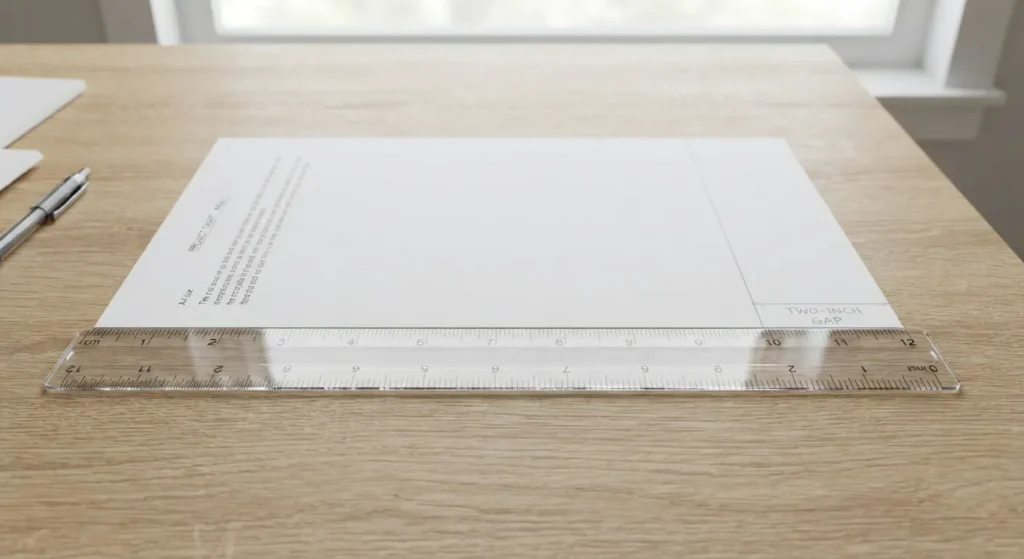
3. A Standard 12-Inch Ruler Plus Two Thumb Widths
A standard wooden or plastic school ruler measures 12 inches in length, leaving just 2 inches left to reach the length of legal paper.
Two average adult thumb widths measured across the knuckle equal approximately one inch each, covering that remaining 2-inch gap.
Rulers are one of the most familiar reference tools in homes and classrooms worldwide.
Envisioning a standard ruler with a small two-inch extension gives an immediate sense of the 14-inch length marker.
4. A Standard Men’s Shoe (Size 14 US)
A US men’s size 14 shoe measures approximately 14 inches in total outer sole length from heel to toe.
Shoe sizing scales increment by fractions of an inch, making a size 14 shoe a helpful physical baseline for a 14-inch distance.
While shoe uppers vary, the rubber outsole on an athletic shoe or boot of this size hits this length boundary consistently.
Setting a large shoe on a desk gives you a quick 1:1 physical proxy for the height of a legal page.

5. A Standard 8.5-Inch Tablet Screen Width
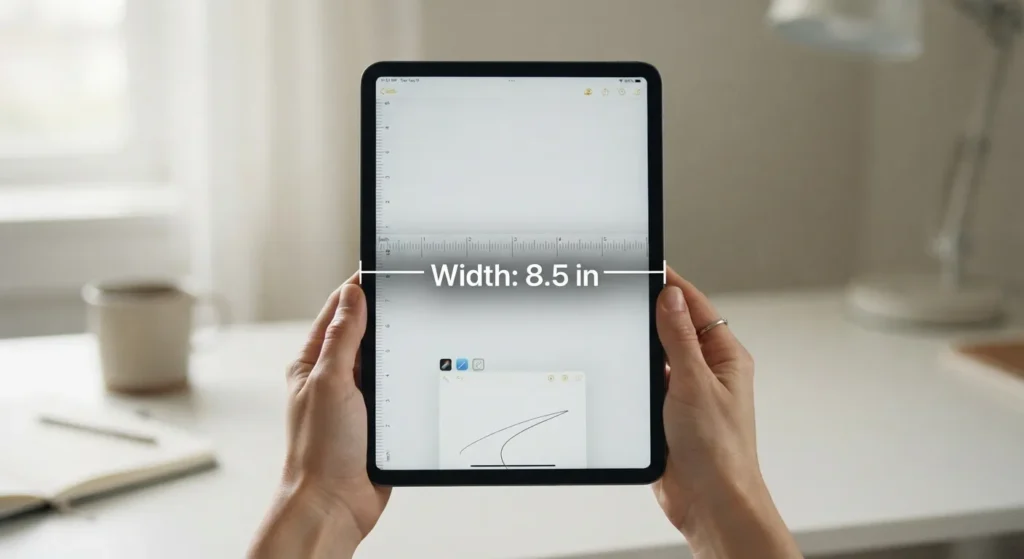
Many 11-inch class tablets, such as standard iPads, measure right around 8.5 inches across their outer chassis width in portrait orientation.
Consumer electronics manufacturers heavily optimize tablet casing dimensions for comfortable one-handed hand grips around the 8-to-9-inch mark.
This 8.5-inch dimension matches the short side of both Letter and Legal paper sheets exactly.
Holding an 11-inch tablet side-to-side gives you the precise width profile of a legal sheet.
6. A Standard 14-Inch Cabinet Pull Handle
Long architectural cabinet handles installed on tall pantry doors or modern kitchen drawers are frequently styled with 14-inch mounting hole centers.
Hardware manufacturers use 14-inch center-to-center spacing to provide balanced proportions on full-height cabinet faces.
These long metal pulls create strong vertical lines across modern kitchen designs.
Grasping a long kitchen cabinet handle gives you a hands-on feel for the 14-inch long edge of legal paper.

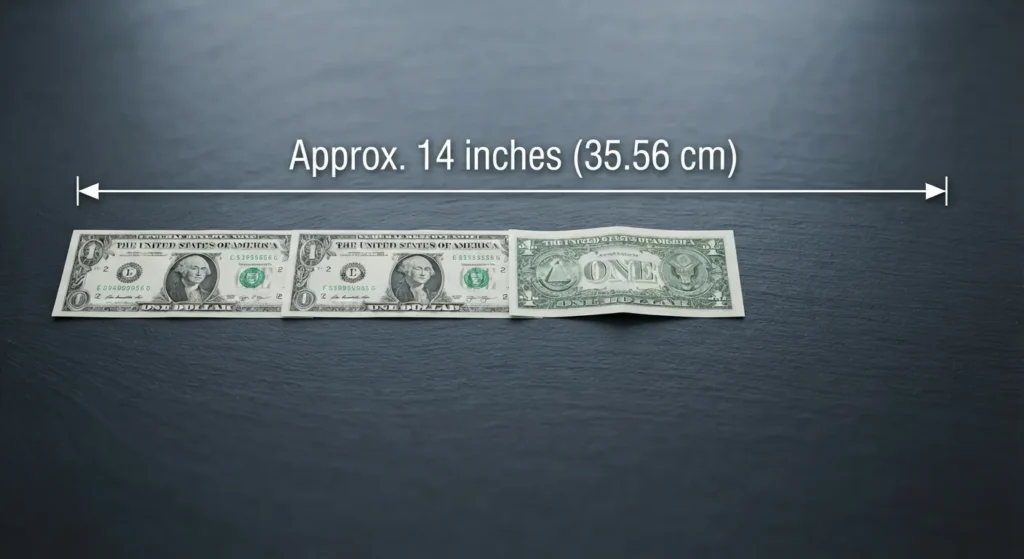
7. Two Standard US Dollar Bills Laid End-to-End
Two US dollar bills placed end-to-end span roughly 12.28 inches, placing them just under 1.7 inches short of the 14-inch legal paper length.
A single US bill measures precisely 6.14 inches long by 2.61 inches wide, serving as a reliable portable ruler.
Adding the short width of a third bill (2.61 inches) brings the total span to roughly 14.89 inches—just over a legal sheet’s length.
Arranging three bills in a T-shape provides a surprisingly accurate field estimate for legal paper dimensions.
8. A Standard Legal Pad Clipboard
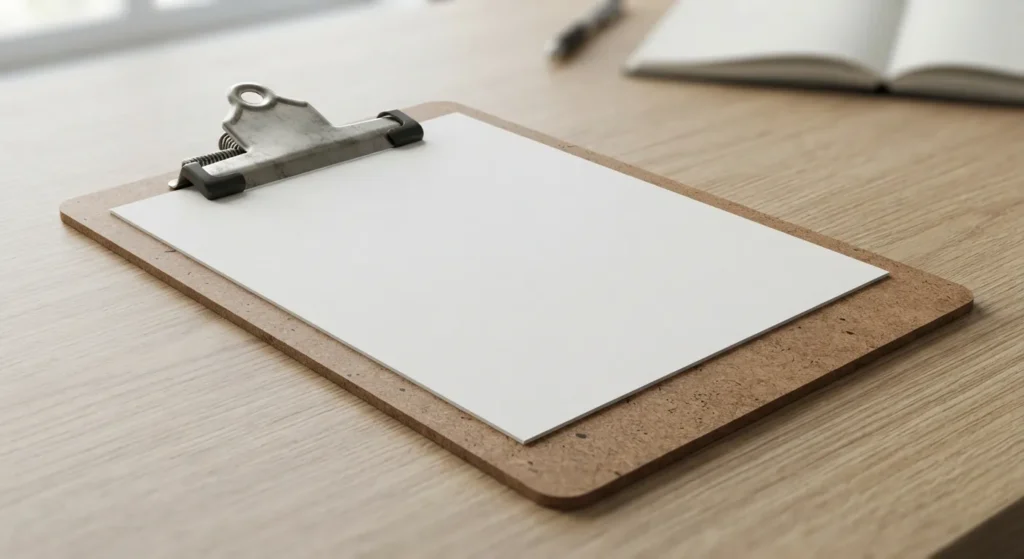
An oversized office clipboard designed specifically for legal pads measures roughly 9 by 15 inches to support a 8.5 × 14-inch sheet with protective borders.
Clipboards feature a sturdy top clip and hard backing board to allow writing away from a desk.
The backing board extends roughly half an inch beyond the paper on all sides to protect document corners from bending.
Holding a legal clipboard gives you the exact physical footprint of a legal sheet plus its working margin.
9. The Width of a Standard 36-Inch Interior Doorway Frame
The width of a standard residential interior doorway frame is typically 36 inches, which is virtually identical to the 35.56 cm (0.356 meter) metric length of a legal sheet scaled by ten.
More directly, if you place two legal sheets end-to-end length-wise, they measure 28 inches, leaving 8 inches of space across a 36-inch door frame.
Door frames serve as reliable architectural anchors because building codes enforce strict standardized opening widths.
Looking across a standard interior doorway helps you gauge how three legal sheets end-to-end fill a three-foot clearance.

10. A Standard Legal Size File Folder
A legal-size hanging file folder measures roughly 9.5 inches tall by 14.75 inches wide along its outer hanging tabs.
Office filing supply companies manufacture these folders specifically to hold 8.5 × 14-inch sheets without folding or crushing their edges.
The extra quarter-inch to half-inch of folder material ensures paper documents drop smoothly below the file cabinet drawer rails.
Opening a legal file drawer offers an immediate visual of sheets resting comfortably inside their dedicated storage system.

The Legal vs. Letter Printer Question People Actually Mean
When people search for legal paper dimensions online, their underlying problem is often practical: Why won’t this document print correctly on my home or office printer?
The Physical Scanner and Tray Limitation
The vast majority of home and compact office all-in-one printers are built around standard US Letter (8.5 × 11 inch) glass platen dimensions.
- The Scanner Glass Problem: If you place a 14-inch legal sheet flat on a standard home printer scanner glass, the bottom 3 inches of the document will hang off the edge and fail to copy or scan.
- The Paper Tray Problem: Standard paper feed trays default to 11 inches. To load legal paper, you must physically push a release latch on the paper tray to extend its back guide outward by 3 inches.
- The Auto-Document Feeder (ADF): To scan full legal documents on a standard printer, you typically need an upper Auto-Document Feeder capable of passing 14-inch pages over the internal sensor.
Understanding these hardware limits saves you from cut-off text, paper jams, and frustrating print driver scaling errors.
Getting to Legal Size Paper Dimensions Without a Tape Measure
If you need to quickly verify whether a document, folder, or drawer fits legal paper dimensions without a tape measure, try these simple practical methods:
1. The Standard Letter Paper Extension Test
Take a sheet of standard printer paper (8.5 × 11 inches) and turn it sideways. The short side is already 8.5 inches—matching legal paper width exactly. To find the 14-inch length, take a second sheet, fold it in half width-wise to create a 5.5-inch section, and overlap it slightly with the first sheet to reach 14 inches.
2. The Dollar Bill Trick
Lay two US dollar bills end-to-end along the long edge of your page. Two bills equal 12.28 inches. Add the width of your index and middle fingers combined (roughly 1.5 to 1.7 inches) at the end, and you hit 14 inches almost perfectly.
3. Forearm Body Reference
For many adults, the distance from the point of the elbow to the tips of the outstretched fingers measures between 14 and 15 inches. Checking a document against your inner forearm gives you a fast, reliable gauge for legal paper length.
FAQs
How many feet long is legal size paper?
Legal size paper is 1.167 feet long (14 inches) and 0.708 feet wide (8.5 inches).
How many cm is legal size paper?
Legal size paper measures 21.59 cm wide by 35.56 cm long.
What is the difference between Legal and Letter size paper?
Both paper types share the exact same width of 8.5 inches. However, Legal paper is 14 inches long, making it 3 inches longer than standard 11-inch Letter paper.
Is legal paper the same as A4 paper?
No, legal paper is both wider and noticeably longer than A4 paper. A4 paper measures 8.27 × 11.69 inches (210 × 297 mm), whereas Legal paper measures 8.5 × 14 inches (215.9 × 355.6 mm).
Can every home printer print on legal size paper?
Most standard inkjet and laser printers can print on legal paper, provided you extend the adjustable paper guides inside the main paper tray. However, smaller compact printers may lack a tray that extends far enough to support 14-inch sheets.
Why is it called legal size paper?
Historically, lawyers, court clerks, and legal aides favored longer paper sheets because they allowed lengthy contractual terms, covenants, and testimonies to be written on fewer total pages with ample room for side marginal notes.
Where That Leaves You
Understanding legal size paper dimensions comes down to recognizing one key detail: it takes the familiar 8.5-inch width of standard Letter paper and adds three extra inches of vertical space to reach 8.5 by 14 inches. In feet, that translates to a neat 0.708 by 1.167 foot footprint.
When you need to visualize this page size without pulling out a ruler, think of a standard sheet of printer paper extended by a 3-inch sticky note, a 14-inch laptop screen diagonal, or a men’s size 14 shoe. Each provides an immediate mental picture of that extended length.
Before printing your next contract or buying filing supplies, double-check that your printer tray extended latch is engaged and your folders are labeled for legal stock. Knowing these measurements upfront ensures your documents feed smoothly and look professional every time.

Jack Harrison is a passionate writer who creates informative, engaging and easy-to-understand content for online readers. He enjoys researching new topics and sharing practical insights that help readers discover useful ideas and information.