
A 40-gallon breeder aquarium can hold a surprising amount of water, yet its footprint is often easier to underestimate than you might expect. It is wide enough to create a useful underwater landscape, but it still needs a carefully chosen stand and enough floor space to support its weight.
If you’re planning a freshwater aquarium, building a fish tank setup, or checking whether one will fit on a cabinet, the outside dimensions matter just as much as the water capacity. Two tanks can hold the same number of gallons while having very different shapes.
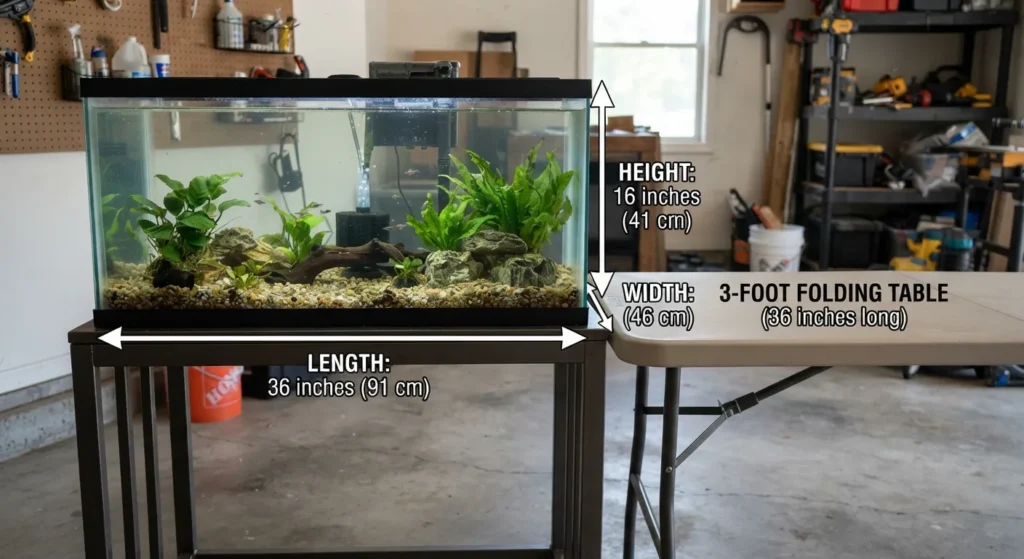
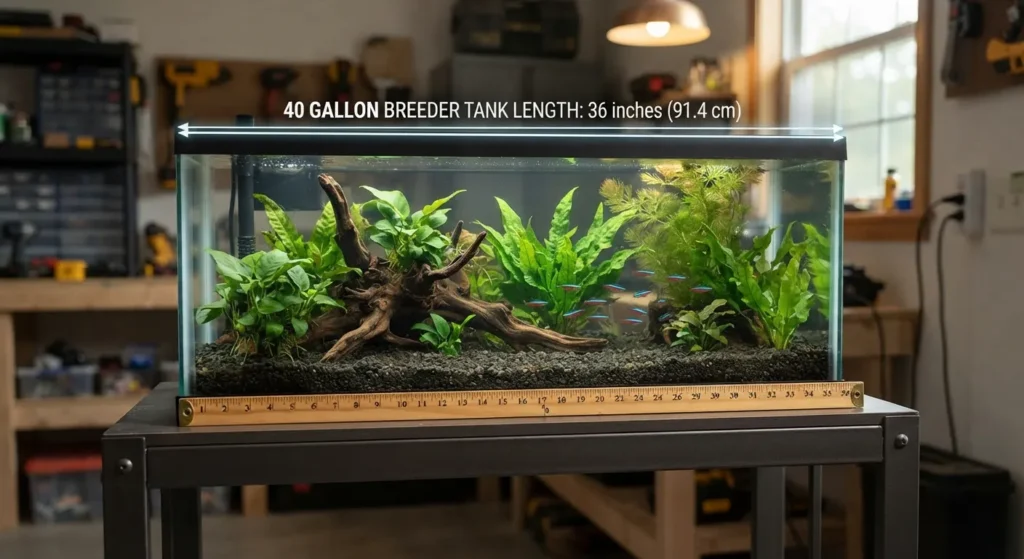
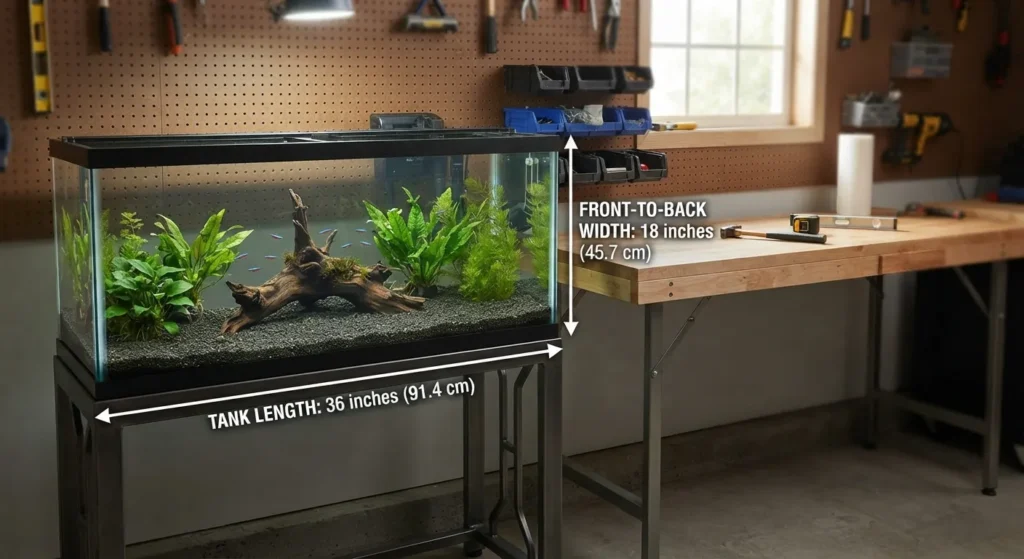
The standard 40 gallon breeder dimensions are approximately 36 inches long, 18 inches wide, and 16 inches tall. That’s 3 feet long, 1.5 feet wide, and about 1 foot 4 inches tall. Exact dimensions can vary slightly by manufacturer and glass thickness.
A typical 40 gallon breeder tank measures 36 × 18 × 16 inches, or 91.44 × 45.72 × 40.64 centimeters. Below, we’ll convert those measurements, compare the tank with familiar objects, and explain how to estimate its size before bringing one home.
Every 40 Gallon Breeder Dimension Converted
A 40 gallon breeder is usually described by three measurements: length, width, and height. These numbers describe the tank’s rectangular footprint and vertical size—not the amount of room it will occupy once you add a stand, light, filter, and other equipment.
| Measurement | Approximate size |
|---|---|
| Length | 36 inches |
| Width | 18 inches |
| Height | 16 inches |
| Length in feet | 3 feet |
| Width in feet | 1.5 feet |
| Height in feet | 1 foot 4 inches |
| Length in centimeters | 91.44 cm |
| Width in centimeters | 45.72 cm |
| Height in centimeters | 40.64 cm |
| Length in millimeters | 914.4 mm |
| Width in millimeters | 457.2 mm |
| Height in millimeters | 406.4 mm |
| Length in meters | 0.9144 m |
| Width in meters | 0.4572 m |
| Height in meters | 0.4064 m |
These are common nominal dimensions for a standard 40-gallon breeder aquarium. Always check the manufacturer’s specifications before buying, especially if the tank needs to fit into an existing stand or cabinet.
How Much Floor Space Does It Need?
Multiply the length by the width to estimate the tank’s footprint:
36 inches × 18 inches = 648 square inches.
That works out to 4.5 square feet of floor or stand surface, before allowing for extra room around the aquarium. A stand should support the tank according to the manufacturer’s requirements, with the correct type of contact and support for its base.
How Are the Conversions Calculated?
The math is straightforward:
- Inches ÷ 12 = feet
- Inches × 2.54 = centimeters
- Centimeters × 10 = millimeters
- Inches × 0.0254 = meters
For example, 36 inches divided by 12 equals 3 feet. For the height, 16 inches divided by 12 equals 1.33 feet, or 1 foot 4 inches.
One important detail: the outside measurements don’t tell you the exact amount of water the aquarium will hold after setup. Glass thickness, water level, substrate, rocks, and decorations all affect the usable water volume.
Where a 40 Gallon Breeder Fits on a Tank Size Chart
The 40 gallon breeder is popular because it offers a relatively broad base without being especially tall. Its 36-inch length gives fish room to move horizontally, while its 18-inch width creates space for rocks, plants, driftwood, and other aquascaping features.
That wider footprint is the main difference between a breeder-style aquarium and some taller tanks. A tank with a similar capacity may provide more vertical space but less room along the bottom.
Here’s how common aquarium sizes compare. Dimensions are typical examples rather than universal standards; brands and tank styles vary.
| Aquarium size | Typical dimensions (L × W × H) | Approximate footprint |
|---|---|---|
| 10 gallon | 20 × 10 × 12 in | 1.39 sq ft |
| 20 gallon long | 30 × 12 × 12 in | 2.5 sq ft |
| 29 gallon | 30 × 12 × 18 in | 2.5 sq ft |
| 40 gallon breeder | 36 × 18 × 16 in | 4.5 sq ft |
| 55 gallon | 48 × 13 × 21 in | 4.33 sq ft |
| 75 gallon | 48 × 18 × 21 in | 6 sq ft |
Notice that a 55-gallon aquarium may be longer than a 40 breeder, but it is often narrower. The 40 breeder can therefore provide a surprisingly generous front-to-back area despite holding less water.
A broad footprint can be useful for arranging bottom-dwelling fish habitats and creating different areas within the tank. However, the correct aquarium depends on the species, adult size, swimming needs, water conditions, and stocking requirements—not just the number of gallons.
12 Things That Help You Visualize a 40 Gallon Breeder
The easiest way to picture an aquarium is to separate its three dimensions. Imagine a 3-foot-long rectangle, 18 inches from front to back, and 16 inches high. These everyday comparisons can help make that shape feel more familiar.
1. A 3-Foot Folding Table Section
A 40 gallon breeder is approximately 36 inches long, which is the same as 3 feet. Picture a folding table or work surface with a 3-foot-long section, and you have a useful reference for the tank’s length.
The width of that table section may be quite different, however. The aquarium extends about 18 inches from front to back, so you need to visualize a rectangle rather than just a long line.
This comparison is particularly useful when deciding whether the tank will fit along a wall. Measure the available space for the full 36-inch length, then allow additional room for hoses, cables, and maintenance access.
2. Three 12-Inch Rulers Placed End to End
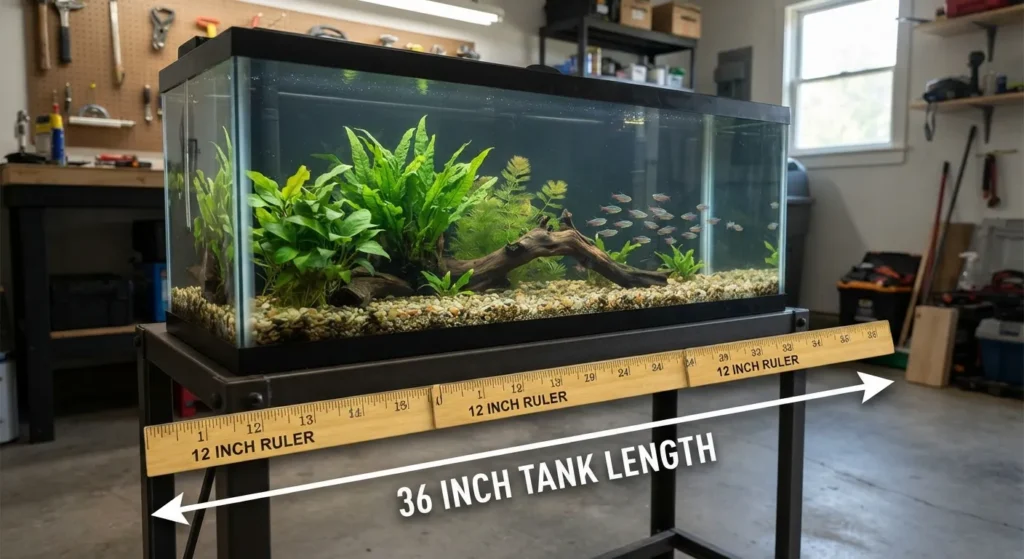
Three standard 12-inch rulers placed in a straight line cover 36 inches. That makes them a handy reference for the length of a 40 breeder.
The trick is keeping them aligned. Small gaps or overlaps can change the total, so this works best as a visual estimate rather than a substitute for measuring the actual aquarium.
The same idea helps when planning a shelf or countertop. A 36-inch space may look generous until you remember that the aquarium also needs enough width and a properly supported base.
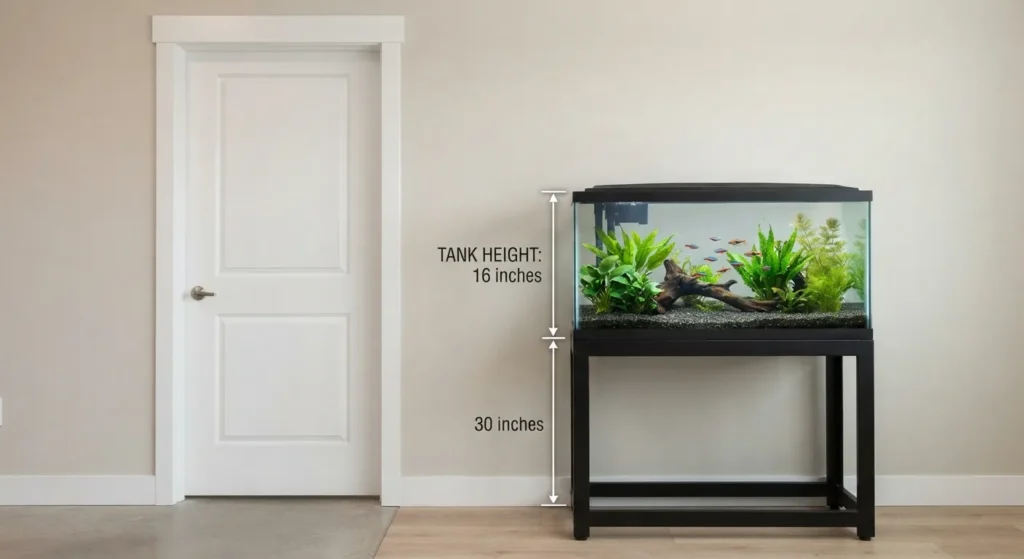
3. A Standard Interior Door’s Height
Many standard interior doors in the United States are about 80 inches tall. Place that height in your mind next to the aquarium’s 16-inch height, and the tank is roughly one-fifth as tall as the door.
This isn’t a comparison of matching shapes; a door is much taller and far narrower. It simply gives you a familiar vertical reference for the aquarium.
If you’re moving the tank into another room, remember that its height alone isn’t the only clearance measurement that matters. Doorway width, hallway turns, packaging, and the tank’s handling requirements also need consideration.
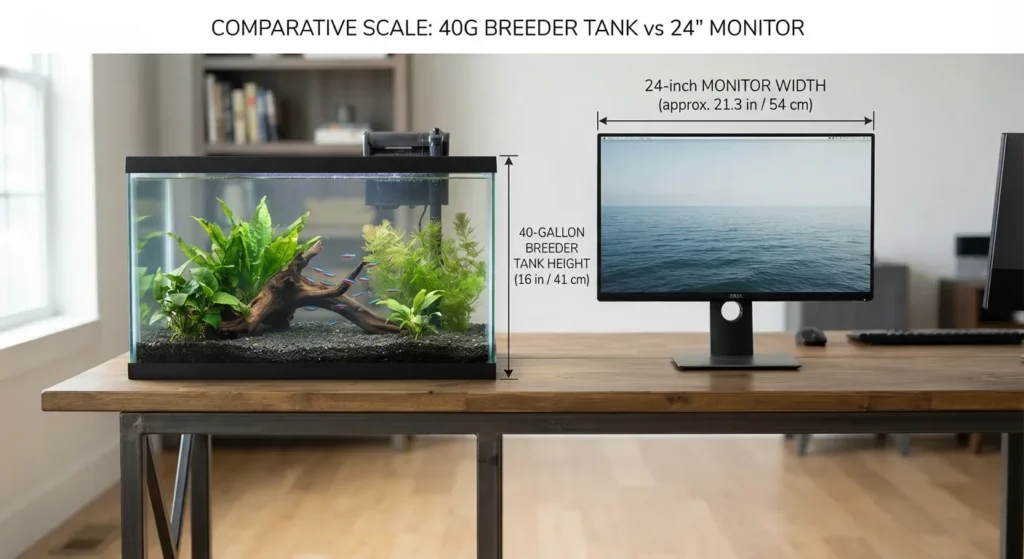
4. A 24-Inch Computer Monitor’s Width
A monitor advertised with a 24-inch screen size is measured diagonally, not across its full width. Many 24-inch monitors have a physical width of roughly 21 inches, depending on the aspect ratio and bezel.
That makes the monitor wider than the breeder tank is tall, but shorter than the aquarium’s 36-inch length. It is a useful way to picture the tank’s vertical height in a familiar home-office setting.
Don’t use the monitor’s advertised screen size as its exact outside width. If you’re planning furniture around either item, check the manufacturer’s physical dimensions instead.
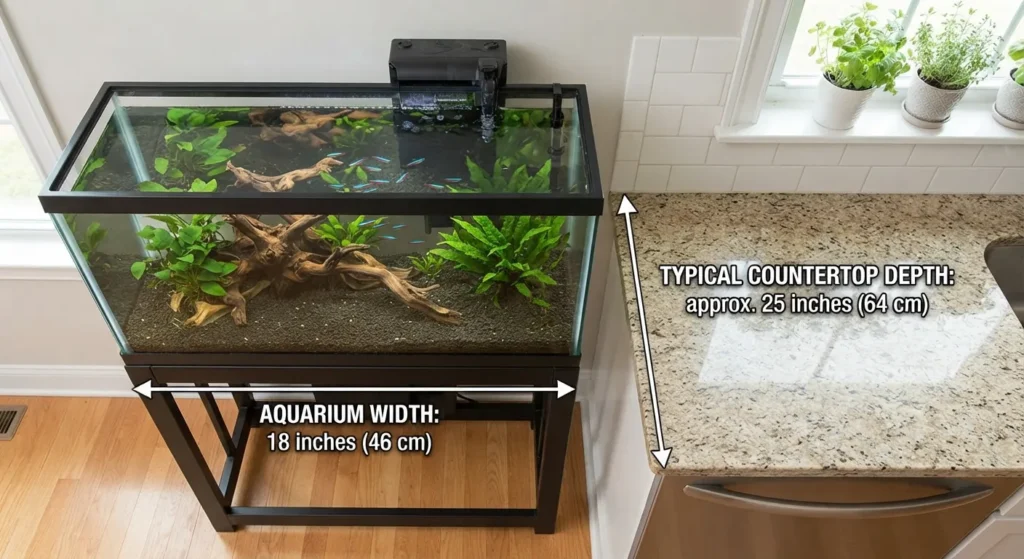
5. A 24-Inch Kitchen Cabinet Depth
Many kitchen countertops are approximately 25 inches deep, including the overhang, while cabinet dimensions can differ by design. An 18-inch-wide breeder tank is narrower from front to back than a typical countertop.
That difference can make the tank seem compact when viewed from the side. But remember that the aquarium is also 36 inches long, so its full base covers a larger rectangle than its depth alone suggests.
A kitchen countertop is not automatically suitable for supporting an aquarium. Water-filled tanks are extremely heavy, and a purpose-built aquarium stand or appropriately engineered support is the safer choice.
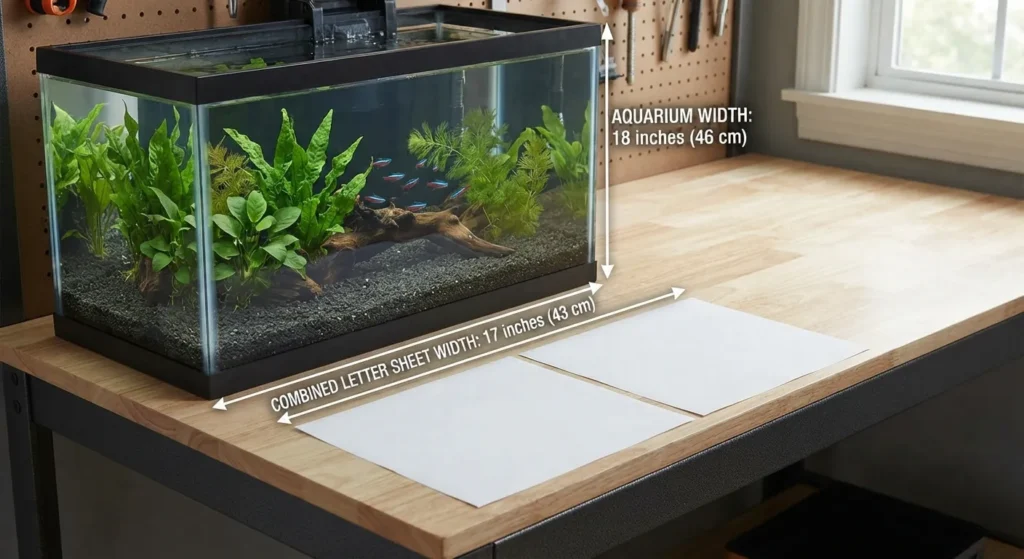
6. Two Standard 8.5 × 11-Inch Sheets of Paper
US Letter paper measures 8.5 inches by 11 inches. Place two sheets side by side along their 11-inch sides, and their combined width is 17 inches—close to the aquarium’s 18-inch width.
The extra inch is a useful reminder that the tank is slightly wider than two such sheets placed edge to edge. The comparison is easy to try on a table before you shop for an aquarium.
Paper can help you sketch the tank’s footprint, but it cannot show its height or weight. Use the paper outline as a planning aid, then verify the final space with proper measurements.
7. A 36-Inch Yardstick
A yardstick is 36 inches long, exactly matching the nominal length of a standard 40 breeder. If you have one at home, lay it along a clear surface to get a direct sense of the tank’s length.
This comparison is more reliable than estimating from furniture because the yardstick has a defined measurement. It still doesn’t show the aquarium’s width or height, though.
For a quick room-planning exercise, mark out a 36-inch line and extend it 18 inches to the side. That rectangle represents the tank’s approximate footprint before you account for the stand and surrounding equipment.
8. A Small Three-Foot Bookcase
A compact bookcase around 36 inches wide can provide a familiar reference for the aquarium’s length. Some low bookcases are close to this width, although their depth and height vary considerably.
The aquarium’s 18-inch front-to-back dimension may be deeper than some narrow bookcases. Its 16-inch height is also much lower than a typical standing bookcase, so compare only the dimensions that are genuinely similar.
Never assume a regular bookcase can safely hold a filled aquarium. A 40-gallon tank can weigh several hundred pounds once water, glass, substrate, and equipment are included. Use a support rated for the load.

9. A 3 × 1.5-Foot Rectangle on the Floor
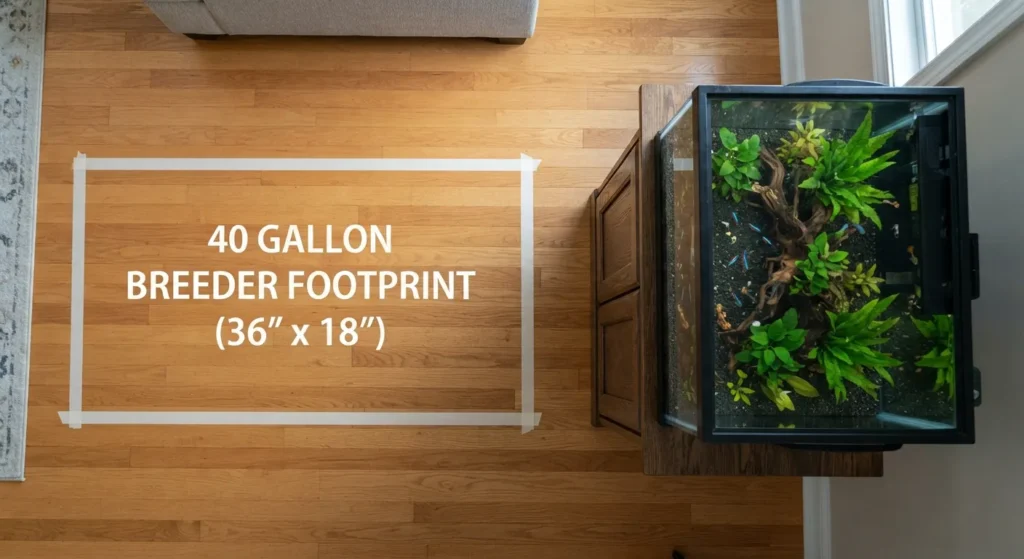
Sometimes the most useful comparison is a shape rather than an object. Mark out a rectangle measuring 3 feet by 1.5 feet on the floor with removable painter’s tape.
This outline matches the aquarium’s nominal 36 × 18-inch footprint. It makes it much easier to judge whether the tank will interfere with a walkway, door swing, desk, or nearby furniture.
The outline does not include the stand’s footprint, which may be larger than the tank itself. Add the stand’s actual dimensions to your plan, and keep room for cleaning and equipment access.
10. A 16-Inch Stack of Books
A carefully arranged stack of books measuring 16 inches high matches the aquarium’s nominal height. Since book thickness varies, you would need to measure the stack or use books with known dimensions to make the comparison accurate.
This gives you a useful idea of the tank’s vertical profile. At 16 inches tall, a breeder aquarium is relatively shallow compared with taller aquariums of similar capacity.
That lower height can make it easier to reach inside for maintenance, depending on the stand and your reach. It does not mean every fish species will thrive in it; habitat and water requirements remain the deciding factors.

11. A 36-Inch Workbench Section
A workbench with a 36-inch-wide section can help you picture the aquarium’s length. Workbenches come in many depths, however, so check whether the surface is also close to 18 inches from front to back before comparing the complete footprint.
The aquarium needs support across the areas required by its design. A workbench that is the right length but too narrow, uneven, or not rated for the load is not a suitable stand.
This is a good comparison when planning a fish-room layout or deciding where a dedicated aquarium stand might fit. Consider access to electrical outlets and water as well as the dimensions.
12. A Rectangular Storage Bin Around 18 Inches Wide
Some household storage bins measure around 18 inches across their shorter side. A bin with that width can help you picture the breeder tank’s front-to-back dimension, though its length and height may be quite different.
Storage containers vary widely, so this comparison works only when the actual bin dimensions are known. A bin that looks similar from above may be much taller, shorter, or tapered toward the bottom.
For planning purposes, the useful takeaway is that the aquarium’s width is about a foot and a half. Pair that with the 3-foot length to visualize the complete base, rather than judging the tank from a single side.

Why a 40 Gallon Breeder Has a Different Shape
The word breeder describes a common aquarium style, not a guarantee that every tank carrying that label has identical dimensions. The standard 40 gallon breeder is typically wider and shorter than a taller aquarium with a similar nominal capacity.
That shape gives you a broad base for arranging substrate, plants, rocks, and driftwood. It can also offer useful horizontal swimming space for suitable species. Whether it is the right habitat depends on the fish and other animals you intend to keep.
Does It Actually Hold 40 Gallons of Water?
The 40-gallon label refers to the tank’s nominal capacity, not necessarily the amount of water you’ll add during a normal setup. The outside dimensions include glass thickness, and the tank is usually not filled all the way to its rim.
Substrate, decorations, equipment, and the space left at the top reduce the actual water volume. For that reason, don’t calculate medication doses, salt additions, or other water treatments from the label alone when an accurate working volume is required.
How Heavy Is a Filled 40 Gallon Breeder?
Water weighs approximately 8.34 pounds per US gallon. Forty US gallons of water would therefore weigh about 334 pounds, before adding the glass aquarium, substrate, rocks, decorations, and equipment.
A fully set-up tank can weigh substantially more than the water alone. Place it on a level, properly rated stand and verify the floor’s suitability if you have concerns about the load. Avoid moving a filled aquarium.
Getting to 40 Gallon Breeder Dimensions Without a Tape Measure
You can make a rough plan without a tape measure, but verify the final measurements before purchasing a tank or stand. These methods are useful for visualizing space, not for confirming structural fit.
- Use a yardstick. A 36-inch yardstick matches the nominal length of the tank. Mark the 18-inch width separately with another reference or a measured line.
- Lay out US Letter paper. Two 8.5-inch-wide sheets placed side by side make a 17-inch span, close to the tank’s 18-inch width. Add a little extra space for the remaining inch.
- Use floor tape. Create a 3-foot-by-1.5-foot rectangle to represent the tank’s footprint. Then mark the stand’s larger dimensions if needed.
- Compare with familiar furniture. A 36-inch-wide work surface can help estimate length, but measure its depth separately. Similar length does not mean the whole footprint will match.
- Check the product specification. Once you identify the tank model, use the manufacturer’s listed exterior dimensions. This is the best way to confirm the actual size before buying.
Frequently Asked Questions
What are the standard 40 gallon breeder dimensions?
A common standard size is 36 inches long, 18 inches wide, and 16 inches tall. Manufacturer-specific models can vary, so check the product details before planning a stand or cabinet.
How many feet is a 40 gallon breeder tank?
Its nominal dimensions are 3 feet long, 1.5 feet wide, and 1 foot 4 inches tall. The footprint is approximately 4.5 square feet.
What are 40 gallon breeder dimensions in cm?
Using the common 36 × 18 × 16-inch size, the tank measures approximately 91.44 cm long, 45.72 cm wide, and 40.64 cm tall.
What are 40 gallon breeder dimensions in mm and meters?
The nominal measurements are 914.4 × 457.2 × 406.4 millimeters. In meters, they are 0.9144 m long, 0.4572 m wide, and 0.4064 m tall.
Is a 40 gallon breeder bigger than a regular 40 gallon tank?
Not necessarily in water capacity, but its shape can be different. A breeder-style aquarium is usually wider and shorter than some taller 40-gallon designs, providing more front-to-back space.
How much space does a 40 gallon breeder need?
The tank itself occupies about 36 × 18 inches, or 4.5 square feet. Allow additional room for the stand, filter, lighting, cables, maintenance, and safe access around the aquarium.
How heavy is a 40 gallon breeder when filled?
Forty US gallons of water weigh about 334 pounds by themselves. The complete setup weighs more after adding the glass tank, substrate, decorations, and equipment, so use a properly rated stand.
Can a 40 gallon breeder fit on a 36-inch stand?
Only if the stand is specifically designed to support that aquarium and its required base dimensions. Matching the tank’s length alone is not enough; verify the stand’s width, support design, weight rating, and the tank manufacturer’s requirements.
Where That Leaves You
A standard 40 gallon breeder measures approximately 36 inches long × 18 inches wide × 16 inches tall. In feet, that’s 3 × 1.5 × 1.33 feet, and its footprint covers about 4.5 square feet.
For a quick mental picture, imagine a 3-foot yardstick for the length and a 17-inch span made from two US Letter sheets for a width that’s just a little larger. Together, those references make the aquarium’s rectangular shape easier to picture.
Before buying, confirm the exact model dimensions and plan for the stand, equipment, and substantial filled weight. A few minutes spent checking the space can save you from discovering that your new aquarium fits the room but not the support beneath it.

Jack Harrison is a passionate writer who creates informative, engaging and easy-to-understand content for online readers. He enjoys researching new topics and sharing practical insights that help readers discover useful ideas and information.